April 2026 | Volume 3 | Issue 9 | Previous Issues
Each month, this year, we’re highlighting at least one teaching tip from one domain of the Teaching Effectiveness Framework (TEF). Our teaching tip for this month comes from the Pedagogical Content Knowledge domain, which is the intersection of content and pedagogical expertise. When instructors know their students’ prior knowledge and preconceptions, they intentionally choose instructional strategies that work best in their discipline for their current students.
What is the Scholarship of Teaching & Learning (SoTL)?
Evidence-based teaching, both general and discipline-specific, relies on Scholarship of Teaching & Learning (SoTL – rhymes with “total”). This field, which emerged in the past several decades influenced by the ideas of Boyer (1990) and Bass (1999), has elevated teaching in higher education from a “sage on the stage” model focused primarily on the instructor to a more nuanced and learning-centered practice. Teacher-scholars not only reflect individually on their teaching challenges and successes, but engage in rigorous pedagogical research and the peer-review process to establish and evolve best practices. In a nutshell, SoTL is “a comprehensive and systematic approach to investigating, improving, and sharing knowledge about teaching and learning in higher education.”
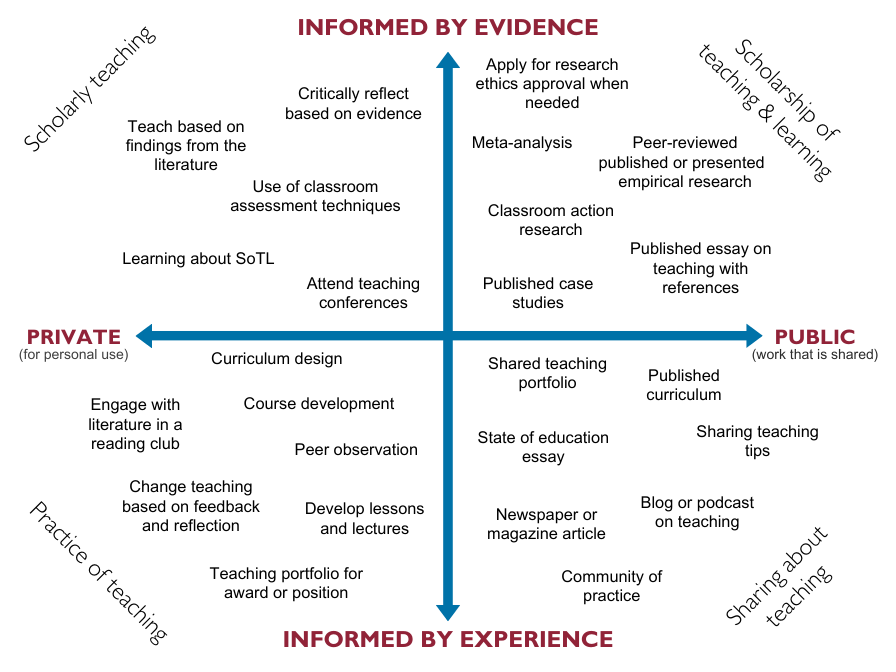
Image Description:
A quadrant diagram illustrating different dimensions of teaching and learning, categorized by their orientation towards evidence or experience, and whether they are shared publicly or kept private. The vertical axis is labeled “Informed by Evidence” at the top and “Informed by Experience” at the bottom. The horizontal axis is labeled “Private (for personal use)” on the left and “Public (work that is shared)” on the right. Each quadrant contains activities or concepts related to teaching and how it is improved and/or shared. The top left quadrant reflects scholarly teaching and includes items like “Teach based on findings from the literature” and “Use of classroom assessment techniques.” The top right quadrant represents the scholarship of teaching and learning, with items like “Peer-reviewed published research” and “Published essay on teaching.” The bottom left quadrant focuses on the practice of teaching with terms like “Curriculum design” and “Peer observation.” The bottom right quadrant involves sharing about teaching, including “Published curriculum” and “Blog or podcast on teaching.”
SoTL encompasses:
- Sharing findings widely to advance understanding of effective teaching in higher education.
- Rigorous inquiry into teaching and learning processes across disciplines.
- Applying evidence-based practices to enhance student learning outcomes.
- Collecting and analyzing data on teaching effectiveness and student achievement.
- Reflecting critically on pedagogical approaches and their impact on diverse learners.
SoTL embraces diverse methodologies, from discipline-based education research to action research, unified by a shared commitment to transforming teaching and learning through evidence-based, systematic inquiry. This holistic approach fosters a culture of continuous improvement in higher education, where insights from various fields inform pedagogical innovations and the science of learning enriches teaching practices across disciplines.
Explore SoTL and other teaching publications
Teaching can be a lonely activity, which is why the CTLI provides opportunities through workshops, book groups, and consultations to talk with colleagues and staff. Dialoguing with others can be reinvigorating and ignite joy in teaching, even when faced with thorny challenges. These kinds of conversations can also occur with colleagues around the nation and world via published SoTL research.
Additionally, investigating resources that are specific to your discipline plays an important role in remaining current in your field and identifying opportunities to update curriculum, activities, and assessments. In some cases, if the changes in a field are particularly rapid, it could even justify updates to student learning outcomes at the program level. Currency in a discipline can also enhance student learning when new concepts are integrated into authentic assessments that make them feel better connected to their future profession. In addition to your own independent research, the resources below could be helpful in supporting your efforts in advancing your pedagogical content knowledge.
VSCS Libraries
The VSCS Libraries are a valuable source of SoTL resources, in particular their Professional Development & Teaching Resources page. The top of the page includes SoTL books and ebooks organized by subject. The bottom portion of the page includes teaching-focused journals organized by program area.
External Sites and Databases
In addition to our own internal resources and your own field-based professional development, the sites below could also be useful as supplemental sources of discipline-specific information.
- Cornell University – Open Educational Resources at Cornell: Discipline Specific
- Kennesaw State University – Teaching Journals in Higher Education
- Northern Arizona University – OER by Discipline
- University of San Francisco – Discipline-Specific Open Educational Resources
Teaching Podcasts
Sometimes we don’t have time to read a book, but a podcast can be a great accompaniment to a walk or a commute. Here are a few reliable and updated podcasts focused on university teaching that may appeal to you:
Consider doing your own SoTL research
Teaching and research go hand-in-hand. The addition of SoTL to your research activities can enhance your RPT dossier, in both the teaching and scholarship categories while deepening or improving student learning and success. As with all research involving human subjects, work with the IRB to ensure ethical and procedural adherence to standards (Martin, 2013).
If you are interested in getting started with SoTL, check out some of the resources in the VSCS library:
- Applying the Scholarship of Teaching and Learning Beyond the Individual Classroom
- The Scholarship of Teaching and Learning : A Guide for Scientists, Engineers, and Mathematicians
- Promoting Social Justice Through the Scholarship of Teaching and Learning
- The Contemplative Mind in the Scholarship of Teaching and Learning
- Going Public Reconsidered: Engaging with the World beyond Academe through the Scholarship of Teaching and Learning
- Scholarship of Teaching and Learning and Assessment: Advancing a Collaborative Model
References
- Bass, R. (1999). The scholarship of teaching: What’s the problem?, Inventio, 1(1), 1-9.
- Boyer, E. L. (1990). Scholarship reconsidered: Priorities of the professoriate. Jossey-Bass.
- Martin, R. C. (2013). Navigating the IRB: The ethics of SoTL. New Directions for Teaching and Learning, 136, 59–71. https://doi.org/10.1002/tl.20076
The section “What is the Scholarship of Teaching & Learning (SoTL)?” on this page is partially adapted from Faculty Research: Scholarship of Teaching and Learning, CC BY 4.0.

Kelly Glentz Brush
This month, we have the pleasure of featuring Lyndon based professor, Kelly Glentz Brush, who teaches art, graphic design, and book arts courses.
What brought you to VTSU and what brings you joy in your faculty role?
I came to Vermont to build my career as a graphic design professor, and it felt like the right fit for me personally and professionally. Vermont has a strong reputation for its natural beauty and thriving artist communities. What brings me fulfillment in my role at the university is working closely with students as they find their own creative voices.
What teaching strategy has had the biggest impact on student learning in your courses, and why do you think it works well in your discipline?
The strategy that’s made a significant impact on the way I teach my classes is using the backwards instructional design model, where I spend time fully developing and implementing the coursework by focusing on the course outcomes. This has ensured that students are gaining more from each course and that each course is playing its part in the overall curriculum for the major.
I have also started to include benchmark examples. In the past, I was concerned that it would limit the students’ creativity or that students would create derivative artwork. I am surprised to say that I have found it highly effective for ensuring that students understand the parameters of the assignments and all the steps in the production process.
Can you share an example of a moment when understanding students’ common misconceptions in your field helped you design a more effective lesson or activity?
The top misconception that I like to dispel is that graphic design students need to use computer software to make effective designs. I have created numerous analog-based assignments that effectively teach the methods and principles of design without the use of computers. Once the student has developed competency in layout design using analog methods, they can rely on that foundational knowledge as they go on to render more advanced concepts and graphic design solutions on the computer.
What changes have you made to your teaching in recent years that improved student engagement or understanding?
I have recently implemented strategies for teaching face-to-face-plus classes in the graphic design major. I did participate in CTLI’s professional development training, but it was through the live experience that I became more effective at engaging students both on Zoom and in the classroom. I allowed myself time to implement more strategies each semester and have now reached a point where I feel that this course modality is running smoothly for everyone involved. One important change that occurred over time was working with my in-person students on how to engage in discussions with students on Zoom, so that the classroom became a more constructive and collaborative space.
Could you describe a teaching approach, assignment, or classroom moment that you feel especially proud of? What made it effective?
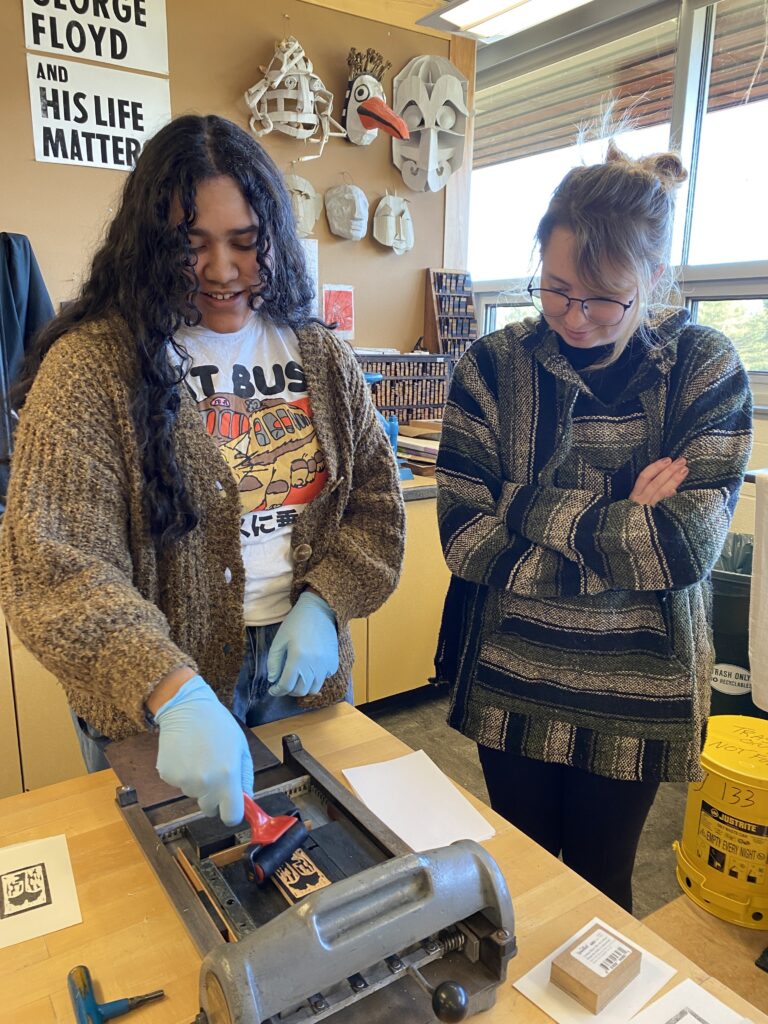
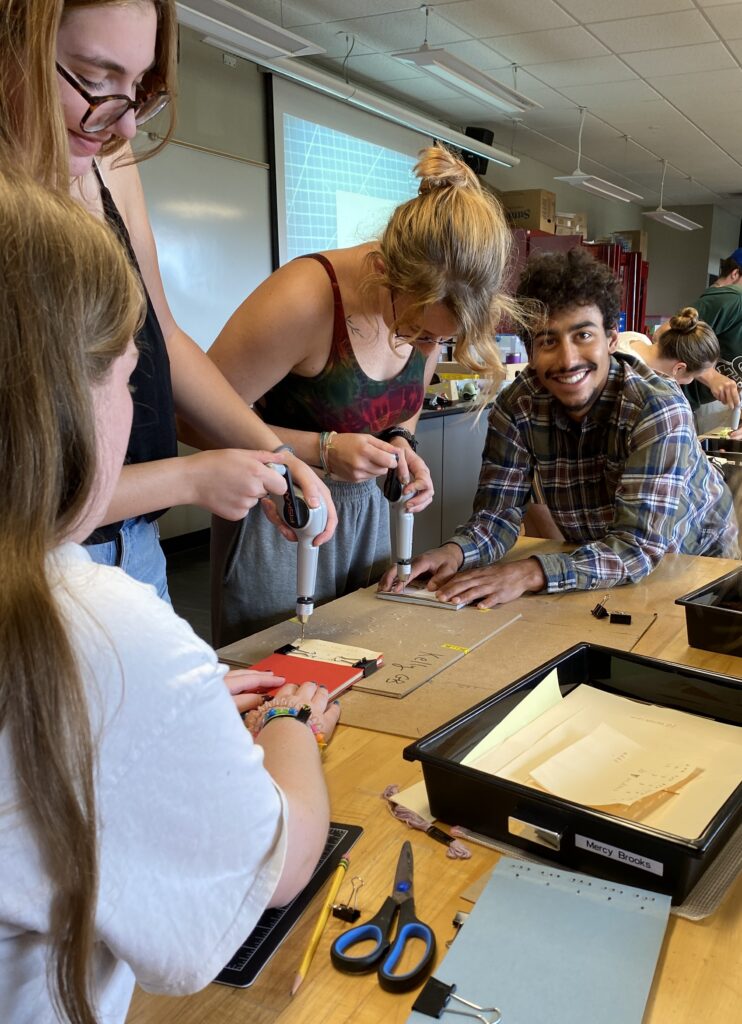
It’s hard to pick just one moment since I have worked at the Lyndon campus for over two decades! However, the book arts courses come to mind. I established the book arts studio, course development, and role in our curriculum at the Lyndon campus. The book arts classes draw students from across our campus programs: art, graphic design, photography, and general education. What I love about it is that it gives everyone a chance to slow down and make books by hand. At a time when we are inundated with software and new digital technology, there’s something very attractive about experiencing a tangible, tactile process. Students come in with a wide range of backgrounds and skill levels, and they all leave with artwork they’re genuinely excited about.
The Center for Teaching & Learning Innovation
Digital Accessibility Skills Series with Jeff Tunney
This workshop series is geared toward faculty and staff members with a basic knowledge of sound digital accessibility practices. The workshops will include hands-on activities that align with accessibility learning modules developed by the CTLI over the past several months and participants are encouraged to review the applicable modules prior to each scheduled session.
Registration
Register now for the final session on April 13th!
Workshops:
April 13: Developing Accessible Emails
Building Anti-Racist Educators: Reading & Inquiry Series
This Reading and Inquiry Series provides a monthly set of tools for learning, introspection and having conversations about issues of racism in our university, classrooms and communities. We hope that through regular reflection and conversation, you can get better at recognizing and resisting your biases and the impact they have on your students and colleagues.
Meetings:
The group will be meeting via Zoom on the following dates:
- Thursday, April 16th (3:00-4:30p)
- Thursday, May 21st (3:00-4:30p)
How to Sign-up:
To receive a calendar invitation, Zoom link, and access to the group’s Canvas space, please fill out the Vermont State Colleges Building Anti-Racist Educators Sign-Up Form.

Spring Series on Writing & Generative AI
The CTLI and Castleton Writing Coordinator are collaborating to deliver a series of 5 professional development sessions for faculty in the Spring 2026 semester on the topic of generative AI and writing in the college classroom.
While you are welcome to attend all of the available sessions, we also invite faculty to come to some of the sessions based on interest in the topic or schedule availability. These Monday sessions (from 12pm-1pm EST) are open to people with all levels of experience with generative AI. Register for one or more!
- April 27, 2026 @ 12:00 pm – 1:00 pm
An Emphasis on Learning while Writing with AI: Transparency, Accountability, & Innovation - May 11, 2026 @ 12:00 pm – 1:00 pm
Reflecting in Community: Learning & Next Steps
Presentation from the 2025-26 AI Faculty Learning Community
Register Now: Best Practices and Lessons Learned
A faculty learning community (FLC) is a small interdisciplinary peer-led group who engages in a collaborative program focused on building a sense of community and enhancing teaching and learning. During the 2025-2026 academic year, the CTLI-sponsored FLC focused on generative AI, and the members have developed a series of recommendations and best practices to share with their faculty peers.
- Format: Presentation followed by a participant panel
- Date: Wednesday, May 6th, from 3:00-4:15p
Learn more about the event, which will be held on Zoom, and register for it at your earliest convenience.
Workshop on Agentic AI
- Date: Wednesday, May 7th
- Time: 12:15-1:30p
- Registration: Learn more about the event, which will be held on Zoom, and register for it at your earliest convenience.
This workshop is an introduction to agentic AI (AI systems that can plan, make decisions, and take action toward goals with limited human prompting). We’ll define and distinguish agentic AI from other types of AI (generative, predictive, custom chatbot agents) and consider the implications of this emerging technology on teaching, learning, and academic integrity. The session emphasizes critical reflection, risk assessment, and possible response strategies, especially with an eye toward Fall 2026 classes.
Our learning objectives for participants:
- Differentiate agentic AI from generative AI, predictive AI, and custom chatbot agents.
- Describe the core characteristics of agentic AI.
- Consider risks, challenges, and limitations of agentic AI in higher education (we’re not sure if there are benefits – but we’ll consider those too!).
- Evaluate implications of agentic AI for course design and assessment.
- Articulate at least one actionable strategy for responding to agentic AI in your own teaching practice.
Facilitated By: Jen Garrett-Ostermiller (CTLI Director) and Jeff Tunney. (CTLI Associate Director).
Summer Teaching Effectiveness Retreat
Express Your Interest!
Earlier this year, we asked for feedback from faculty about their professional development interests related to the Teaching Effectiveness Framework.
Far and away, the strongest desire was related to student motivation.
The CTLI is pleased to announce that we will be holding the inaugural VTSU Teaching Effectiveness Retreat in June at Randolph (in-person). Participants will be paid $300 for their time along with mileage reimbursement. Meals will be provided.
- Format: Workshops, Guided Discussions, Activities to Prep for Fall Classes
- Date: Thursday, June 11, 2026 (9:30-3:00)
We have budget to pay for 15 participants. Please express your interest by completing this form by April 24. If we have more interest than capacity, we’ll follow up with everyone who’s expressed interest with a short application process.
Upcoming Workshops
Note: All upcoming events can be viewed on the CTLI Events calendar. See below for the next 10 sessions.
As you likely know, starting this month on April 24, 2026, all public higher education institutions of our size must be compliant with new regulations for accessibility of digital content. The regulations are based on the WCAG 2.1 AA standards, which are written for a technical audience.
In the CTLI, through the EdPros workshops, reading, and research, we have been gaining knowledge of digital accessibility. And we are creating tutorials on some of these key skills for faculty, translating the technical standards for general users. We are collating digital accessibility resources on our webpage for easy access, as well.
Check out our ninth tutorial on Best Practices for Remediating PDFs. And see if you can ace the knowledge check at the end!
Previous Tutorials:
- Top 5 Best Practices for Creating Alt Text, Image Descriptions, and Captions
- Top 5 Best Practices for Structuring Accessible Documents
- Top 5 Best Practices for Creating Accessible Hyperlinks
- Top 5 Best Practices for Selecting Accessible Color Combinations
- Top PDF Alternatives
- Panorama Best Practices
- Best Practices for Writing Accessible Emails
- Developing Accessible PowerPoints
If you have feedback on the tutorial or topics you’d like to see us cover in future months, let us know by emailing ctli@vtsu.edu. Thank you so much.
Multilingual Student Services
Multilingual Multicultural Exhibition 2026
Dates: April 21 to April 28
Location: Calvin Coolidge Library, VTSU Castleton and Online
Inquiries: Mary.Dinh@VermontState.edu
Faculty members are warmly invited to participate in a one-week campus-wide Multilingual Multicultural Exhibition from April 21 to April 28, hosted by VTSU Multilingual Student Services and sponsored by the Office of Culture and Institutional Excellence and Academic Support. The exhibition celebrates inclusive excellence and global learning at VTSU by highlighting how we teach, support, and collaborate across languages and cultures.
The exhibition features artwork and poster displays, presentations, student-led cultural tea & coffee ceremonies, international food, book talks and recommendations, and a virtual workshop. For a full detailed programming of events, please visit the VTSU Multilingual Student Services SharePoint site or visit the Virtual Library.
If you have any inquiries about this event, please email Dr. Mary Dinh via Mary.Dinh@VermontState.edu
Free Virtual Workshop
Internationalization Starts on Campus: Empowering Faculty and Students to Elevate Institutional Profile
Invited Speaker: Dr. Ryan Vu (RMIT & AMES Australia, Australia)
Date: April 21, 2026
Time: 12:30-1:45p
Location: Zoom

Dr. Ryan Vu is a distinguished scholar educator whose work advances intercultural sensitivity, graduate employability, and the internationalization of higher education. With interdisciplinary training from the University at Albany, SUNY, Concordia University Chicago, and the University of Chester, he brings a globally informed and strategically grounded perspective to the ways institutions can cultivate meaningful internationalization and strengthen their standing in an increasingly interconnected academic landscape. His teaching, research, and academic leadership across Vietnam, Australia, and the United States have engaged critical issues in intercultural communicative competence, English medium instruction, social justice, and global engagement in higher education.
Dr. Vu’s professional and academic experience includes work with leading universities and organizations such as RMIT University, Vietnam Japan University, Hanoi University of Science and Technology, Phenikaa University, Vietnam National University, AMES Australia, PwC Vietnam, Daiichi Life Vietnam, the University of East Anglia, and the University at Albany. Drawing on this breadth of international experience, Dr. Vu offers a nuanced understanding of how faculty and students can serve as catalysts for internationalization through campus-based initiatives, collaborative practices, and intercultural engagement. In this workshop, Dr. Vu will examine how internationalization can begin on campus and how the collective efforts of faculty and students can elevate institutional profile, reputation, and global impact.
Webinar
Collaborative Assessment: Multilingual Learners and Teachers Forging Partnerships
- Speakers: Dr. Margo Gottlieb and Dr. Andrea Honigsfeld
- Date: April 30, 2026 (6:00-7:00 pm EST)
- Register for the webinar
AI Innovation Fund (a project of the Chancellor’s Innovation Fund)
Request for Testers
We are seeking approximately 10 VTSU faculty and 10 VTSU staff to participate in a pilot of a new foundational AI literacy training module as part of the Chancellor’s Innovation Fund. This is not a formal research study. Rather, we are evaluating the effectiveness of the module as part of an internal program development process. Participants will be asked to complete the module and provide feedback through short surveys to help us assess clarity, usefulness, and impact.
The module we developed was designed to clarify core AI concepts and establish shared understanding across the institution. We are intentionally seeking participants with a wide range of experience levels—from those who feel very unsure about AI to those who feel somewhat comfortable but want clearer conceptual grounding.
Testers will be asked to:
- Complete a short pre-survey (5–7 minutes)
- Complete the online AI module (approximately 20 minutes)
- Complete a post-module survey (10 minutes)
- Complete a brief follow-up survey approximately 30 days later (5 minutes)
Total time commitment: approximately 60 minutes
If you are interested in participating, please complete our AI Literacy Pilot form. The form will help us ensure there are testers with a range of AI experience and understanding.
Please refer any questions to the Director of Learning Technologies, Sarah Chambers at Sarah.Chambers@vsc.edu.
The VSC IT Learning Technologies Team
The VSC IT Learning Technologies Team provides support to faculty with both instructional and classroom technologies. Visit the Learning Technologies SharePoint Site for staff info, service details, upgrade notifications, classroom guides, and on-demand support.
For help from the VSC IT Learning Technologies Team, please submit a ServiceDesk ticket.
Upcoming Canvas Workshop for Faculty
Beyond Multiple Choice: Elevating Student Assessment with New Quizzes
Discover how New Quizzes gives you more powerful tools to assess student learning while actually saving you time. This session focuses on faculty-favorite features, including AI-powered question creation and enhanced support and settings. We’ll demonstrate how to provide more flexible accommodations and use richer data to refine your teaching strategies through seamless survey and outcome tracking.
- Hosted by Instructure
- Tuesday, April 14, 2026 | 2:00-3:00pm EST
- Event Registration (click to access)
Canvas Course Availability & Publication Reminders
VTSU Fall 2026 courses that begin August 24th will be available to faculty on May 22nd. VTSU fall courses will automatically publish and be available to students on August 17th.
VSCS Libraries
Great news! We are so excited to share the launch of our new Library Learning Modules. Below you’ll find helpful information and dates for informational sessions.
New Library Learning Modules
The VSCS Libraries provides information literacy (IL) resources to support faculty teaching about AI, citations, evaluating information, and other essential research and academic skills.
We are excited to announce the release of 11 new Library Learning Modules (LLMs) on information literacy for Canvas courses! These modules were designed with accessibility, long-term durability, Canvas compatibility, and academic standards in mind.
These new “homegrown” modules replace older modules incorporating content from the Credo InfoLit platform, which will be discontinued. Faculty using older library modules in their courses should update to the newer versions.
Launch Timeline
April 1 – New Library Learning Modules will be available in Canvas Commons. (The old library modules will be replaced with the new versions.)
Please update any older library modules being used in your course(s) with the new modules. You should also remove any individual Credo InfoLit tutorials or videos used in courses.
April 14, 12:00-1:00 PM – Library Learning Modules Introductory Session (Microsoft Teams)
May 19, 4:00-5:00 PM – Library Learning Modules Introductory Session (Microsoft Teams)
July 1 – Credo InfoLit subscription ends
Need Help?
Contact the VSCS Libraries. We would be happy to answer questions or update your course for you.