May 2026 | Volume 3 | Issue 10 | Previous Issues
Reflective Teaching – Student Feedback
Leveraging Student Feedback on Teaching
Collecting student feedback on your teaching is one way to assess the impacts of your teaching and use data to reflect on improvements to your teaching.
Student feedback can be collected in a variety of formats:
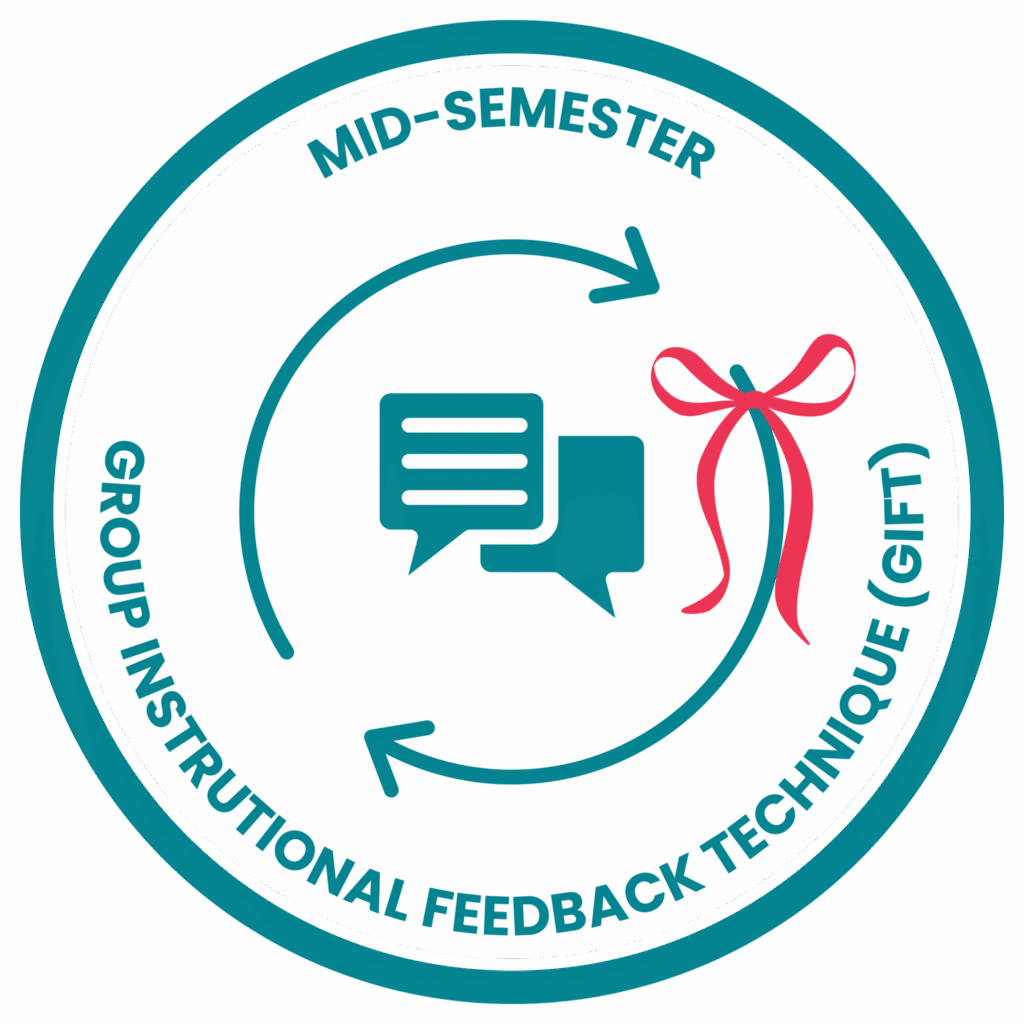
- Expressing your interest in the CTLI’s Mid-Semester GIFT program, which is an evidence-based practice, conducted mid-semester, that provides instructors with timely formative and actionable feedback to improve the quality of a course.
- Before, during, and after individual class periods.
- Via an early-semester survey.
- In a mid-semester questionnaire.
- After the course has finished in student course evaluations.
- As part of your formative assessments, which are lower stakes learning activities or assignments that contribute minimally to students’ grades and provide both students and instructors with feedback on students’ progress with the course material.
Why Collect Student Feedback During the Course?
Collecting student feedback throughout your course comes with several benefits to teaching (Angelo & Cross, 1993; Brookfield, 2017).
- Make changes in real time. You can proactively address any instructional and/or classroom management/logistical issues.
- Build trust and rapport with your students. By soliciting and thoughtfully responding to students’ feedback, students can see that you care about, and are invested in, their learning.
- Develop students’ metacognitive thinking skills (Schraw & Moshman, 1995). When collecting feedback during class, you not only assess the impact of your teaching strategies, but students can also become more aware of their own learning processes – their strengths and areas for improvement, study skills that could be strengthened, and what they could do differently to improve their learning experience in your course.
- Foster a sense of community among your students. Students, especially in larger classes, can feel less anonymous if they feel that their voices are being heard by their instructor.
- Help students see the rationale behind your teaching strategies and activities. When reporting out student feedback on your class activities, students can see the value of various class activities to different students. What may not work for one student may be working very well for others. This helps to reduce student resistance to your use of teaching strategies in a class that don’t always align with student learning preferences.
How to Set Up Your Classroom Environment
Here are some things you can try to set up your course and classroom environment to be conducive to student feedback (Ambrose et al., 2010, Svincki, 2001):
- Respond to students’ feedback. It is important to close the loop on the feedback cycle. You can increase students’ motivation to give you feedback by affirming their belief that their feedback will make a difference in your teaching and their learning experience.
- Reframe office hours as drop-in hours. Shape an open-door policy in which students can approach you with constructive feedback.
- Set expectations up front about how feedback will be part of your course. Discuss the importance of giving and receiving feedback in the learning process and how feedback can facilitate their learning (e.g., as a writer, professional, scientist, artist, etc.).
- Model what effective feedback looks like and give students opportunities to practice giving feedback (e.g., group work, peer review of work). Try to give them feedback as soon as possible after the learning activity is complete.
- Provide students with choices for formats for activities and assignments. This can give students agency, or a voice in their learning, in your course. It can also give you data on students’ learning preferences to help you decide on the format for the assignments in the next offering of the course. In addition, this strategy supports universal design for learning (increasing the flexibility and accessibility of your course to reach diverse learners) and promotes student engagement.
- Use classroom assessment techniques (CATS). Try techniques to collect real-time feedback on student understanding to make adjustments to your teaching methods (Angelo & Cross, 1993). Examples of CATS are shared on the CTLI’s website.
How to Analyze and Respond to Student Feedback
Analyze the feedback. Group feedback into categories that make sense for you (e.g., positive vs. negative comments or responses, common themes). When reflecting on the feedback, consider the feedback holistically and focus on consistent trends.
Follow up with your students. Talk to your students about your feedback, whether in a verbal summary or tabulating responses (Microsoft Forms can visualize quantitative responses for you, and you can use word cloud generators to visualize open-ended responses). Let students know aspects of the course you will and won’t change, and your rationale.
Implement the changes. To close the loop on the reflective teaching cycle, implement some of the changes suggested by students. Depending on the feedback you receive, you can implement them now, during the course, or in your next offering of the course. Be transparent with your students about your plan for implementing (or not implementing) changes and briefly explain why or why not.
Considerations for Your Course Context
When making your plan to incorporate the collection of student feedback in your course, consider the following questions:
- What kind of feedback are you looking for? Your goals for feedback determine the type of classroom assessment technique you use. For example, you could use polling or a brief writing activity to gather feedback on a specific instructional strategy that you are trying for the first time. You can also use a more structured midterm feedback technique, such as the CTLI’s Mid-Semester GIFT, to receive comprehensive feedback on your whole course and methods of instruction.
- How much time, resources, and support do you have? It is not necessary to implement all the student feedback strategies, and in every class session. What is feasible given your time and resources? How might TAs or learning assistants be able to assist you?
- Are you teaching a large-enrollment course? Consider the frequency with which you want to administer the feedback strategies and analyze the data. For example, you could sample a portion of your class and rotate the week in which students complete the assessments.
- In what modality are you teaching? For in-person, on campus classes, pen/paper is relatively easy to administer, typically resulting in a high student response rate. However, educational technology tools and apps can give you a plethora of options to gather feedback from your students. Consider trying different methods and see which ones work best for you and your students. Make sure you set aside time for students to give you feedback; asking them to do this outside of class likely will not result in a high response rate unless you incentivize completion with participation points.
Learn More About Feedback and Assessment
Members of the faculty are encouraged to learn more by reviewing techniques shared in the Feedback & Assessment domain of the Teaching Effectiveness Framework. VTSU educators are also welcome to schedule a consultation with a CTLI staff member to discuss specific strategies and potential participation in our Mid-Semester Group Instructional Feedback Technique (GIFT) Program.
References
Ambrose, S. A., Bridges, M. W., DiPietro, M., Lovett, M. C., & Norman, M. K. (2010). How learning works: Seven research-based principles for smart teaching. John Wiley & Sons.
Angelo, T., and Cross, K. P. (1993). Classroom Assessment Techniques: A Handbook for College Teachers. (2nd ed.). Jossey-Bass Publishers.
Brookfield, S. (2017). Becoming a Critically Reflective Teacher. (2nd ed.). Jossey Bass.
Schraw G., & Moshman D. (1995). Metacognitive Theories. Educational Psychology Review, 7(4), 351-371.
Svinicki, M. D. (2001). Encouraging your students to give feedback. New Directions for Teaching and Learning, 87, 17-24.
Citation: Tse, Crystal (2022). “Peer Feedback on Your Teaching.” Center for the Advancement of Teaching Excellence at the University of Illinois Chicago. Retrieved April 20, 2026 from https://teaching.uic.edu/resources/teaching-guides/reflective-teaching-guides/peer-feedback-on-your-teaching/
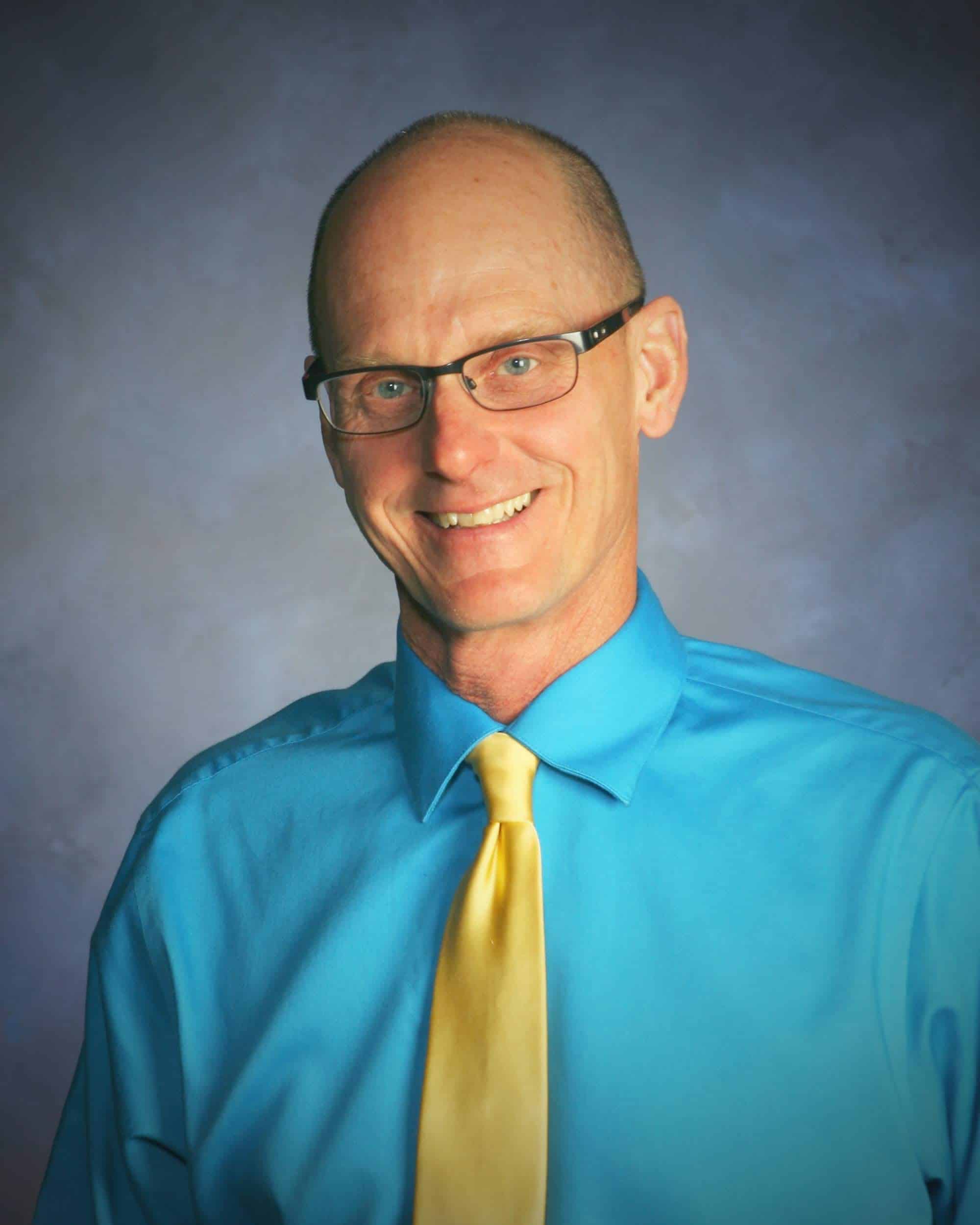
Nolan Atkins
This month, we have the pleasure of featuring Vermont State University Provost, Dr. Nolan Atkins, who is retiring in June after a long, service-oriented career with Lyndon State College, Northern Vermont University, and Vermont State University. Nolan served as faculty and Chair in the Atmospheric Sciences Department before moving into academic and institutional leadership roles, retiring as the inaugural Chief Academic Officer of VTSU.
What have you learned from VTSU’s faculty that you’ll carry with you beyond your official tenure as Provost?
Faculty who seek out an institution like VTSU do so because they are passionate about being part of the student transformational experience. They embrace the mission of supporting the success of all students. I have great admiration for all my faculty colleagues who tirelessly embrace this work. That dedication to this purpose will carry forward in whatever comes next for me. I have always been passionate about the purpose of higher education as a public good. That will never change.
How has working at NVU and VTSU shaped your own thinking about teaching and learning?
When I first started teaching in the Meteorology Department at Lyndon State College, I used teaching methods that I was exposed to as an undergraduate and graduate student. Those methods are no longer relevant. Effective teaching has changed dramatically since then as student needs and how they learn have changed. I have great respect for the faculty who continue to evolve their teaching strategies to provide the most effective learning environments for our students. It is a significant challenge. It’s hard work.
What insight about higher education do you think is most often overlooked, but has proven crucial in your experience?
What gives me the most optimism about the future of VTSU and its students are those faculty and staff who will engage fully and productively with the new leadership team to ensure that, consistent with our mission, we will continue to evolve VTSU to provide critical access to higher education for Vermonters and others who will choose VTSU. There is more difficult work to do, but working together, we can achieve the necessary outcomes that will ensure VTSU’s future sustainability.
When you look back on your time with the NVU and VTSU, what accomplishments are you most proud of, and why do they stand out to you now?
I’m most proud of being part of the NVU merger, the closure threat, the COVID pandemic, and now the creation of VTSU on a very swift timeline. Any one of these events was significant on its own, but to navigate all four in leadership roles was significant. It was not perfect, we made many mistakes, but we persevered. It was a truly remarkable journey.
As you transition into retirement and the next chapter of your life, what are you most looking forward to?
I’m looking forward to a slower pace of life and spend more time with my family. I plan to spend a lot more time outside pursuing hobbies that have fallen by the wayside in recent years. I am contemplating part-time teaching in North Carolina and will need to redevelop the appropriate skills to be effective in the classroom once again.
Presentation from the 2025-26 AI Faculty Learning Community
Register Now: Best Practices and Lessons Learned
A faculty learning community (FLC) is a small interdisciplinary peer-led group who engages in a collaborative program focused on building a sense of community and enhancing teaching and learning. During the 2025-2026 academic year, the CTLI-sponsored FLC focused on generative AI, and the members have developed a series of recommendations and best practices to share with their faculty peers.
- Format: Presentation followed by a participant panel
- Date: Wednesday, May 6th, from 3:00-4:15p
Learn more about the event, which will be held on Zoom, and register for it at your earliest convenience.

Spring Series on Writing & Generative AI
The CTLI and Castleton Writing Coordinator are collaborating to deliver a series of 5 professional development sessions for faculty in the Spring 2026 semester on the topic of generative AI and writing in the college classroom.
Our final session is forthcoming, an opportunity to reflect on and share with others lessons learned from the past semester related to generative AI and writing, along with goal-setting for next year.
- May 11, 2026 @ 12:00 pm – 1:00 pm
Reflecting in Community: Learning & Next Steps
Building Anti-Racist Educators: Reading & Inquiry Series
This Reading and Inquiry Series provides a monthly set of tools for learning, introspection and having conversations about issues of racism in our university, classrooms and communities. We hope that through regular reflection and conversation, you can get better at recognizing and resisting your biases and the impact they have on your students and colleagues.
Next Meeting:
The group will be meeting via Zoom on the following date:
- Thursday, May 21st (3:00-4:30p)
How to Sign-up:
To receive a calendar invitation, Zoom link, and access to the group’s Canvas space, please fill out the Vermont State Colleges Building Anti-Racist Educators Sign-Up Form.
Upcoming Workshops
Note: All upcoming events can be viewed on the CTLI Events calendar. See below for the next 10 sessions.
- October 7 @ 3:00 pm – 4:00 pm
Critical Thinking, Part 2: The Brookfield Approach
- October 9 @ 12:15 pm – 1:15 pm
Critical Thinking, Part 1: The Paul & Elder Framework
- October 12 @ 12:15 pm – 1:00 pm
Staying in the Loop Series – Advising
- October 19 @ 12:15 pm – 1:00 pm
Staying in the Loop Series – McNair Scholars Program
- October 21 @ 12:00 pm – 1:00 pm
Collaborative Learning: Increasing Student Motivation and Engagement Through Peer Instruction
- October 22 @ 12:00 pm – 1:00 pm
Advancing Accessibility in Your Courses with New and Old Panorama Tricks (Presented by CCV)
- October 23 @ 12:15 pm – 1:15 pm
Critical Thinking, Part 2: The Brookfield Approach
- October 26 @ 12:15 pm – 1:00 pm
Staying in the Loop Series – Disability Services
- October 28 @ 12:00 pm – 1:00 pm
Providing Choices: Impact on Student Motivation and Engagement
- November 2 @ 12:15 pm – 1:00 pm
Staying in the Loop Series – The Office of Culture and Institutional Excellence
As you likely know, all public higher education institutions of our size must be compliant with new regulations for accessibility of digital content. The regulations are based on the WCAG 2.1 AA standards, which are written for a technical audience.
In the CTLI, through the EdPros workshops, reading, and research, we have been gaining knowledge of digital accessibility. And have created tutorials on some of these key skills for faculty, translating the technical standards for general users. We are collating digital accessibility resources on our webpage for easy access, as well.
Check out our tenth tutorial on Developing Accessible Excel Spreadsheets. And see if you can ace the knowledge check at the end!
Previous Tutorials:
- Top 5 Best Practices for Creating Alt Text, Image Descriptions, and Captions
- Top 5 Best Practices for Structuring Accessible Documents
- Top 5 Best Practices for Creating Accessible Hyperlinks
- Top 5 Best Practices for Selecting Accessible Color Combinations
- Top PDF Alternatives
- Panorama Best Practices
- Best Practices for Writing Accessible Emails
- Developing Accessible PowerPoints
- Best Practices for Remediating PDFs
If you have feedback on the tutorial or topics you’d like to see us cover in future months, let us know by emailing ctli@vtsu.edu. Thank you so much.
Multilingual Student Services
We are pleased to announce the following May events, which are sponsored by the Office of Culture and Institutional Excellence.
Faculty Session
Teaching Multilingual Learners in Healthcare Programs: Culturally Responsive and Practice-Oriented Strategies
Date: Thursday, May 7, 2026
Time: 12:30 – 2 PM (with optional Q&A session from 2 to 2:30 PM)
Join on Zoom
As our nursing program serves an increasingly diverse multilingual student population within a predominantly monolingual higher education setting, this professional development workshop invites faculty to explore language-aware pedagogy, bilingual assessment, translanguaging-informed practices, and practical teaching strategies that can strengthen student learning, participation, and success in rigorous healthcare education contexts.
Facilitator: Dr. Laura Mendoza Fierro
Dr. Laura Mendoza is the Assistant Professor of Instruction and Director of Undergraduate Studies at University of Texas at El Paso, where her teaching and research focus on inclusive bilingual pedagogies, translanguaging, gamification, and equitable support for emergent bilinguals. She also specializes in Language for Specific Purposes, including Medical Spanish, Spanish for the Nursing and Pharmacy, and Spanish for Occupational Therapy, and has prior teaching experience in Medical Spanish at the Paul L. Foster School of Medicine. Her background makes her especially well- positioned to support both multilingual nursing students and the faculty who teach them.
Student Session
Building Confidence in Healthcare Communication: A Culturally Responsive and Interactive Approach for Multilingual Nursing Students
Date: Thursday, May 7, 2026
Time: 9:30 – 11:30 AM
Join on Zoom
This session is available to students and focuses on clinical communication strategies, medical vocabulary development, participation, and confidence building through interactive and gamified practices. It will speak directly to several important challenges that affect student success and retention, including medical terminology, time pressure in standardized exams such as the NCLEX, and first language processing. If you know any multilingual students in your classes, please send this information and encourage them to join us.
Facilitator: Dr. Laura Mendoza Fierro
VSCS Libraries
“Happiness? The color of it must be spring green.” -Frances Mayes
Finals are around the corner, and we’re here to help your students to succeed!
Send Your Students to the Library (in person or online!)
Please encourage your students to use the red Get Help tab on the library website for quick access to support via:
- Live chat
- Text (802-278-0997)
- Phone (800‑431‑0025)
- Email (libraries@vsc.edu)
- Schedule a research appointment.
New Library Learning Modules
As you prepare for your fall courses, don’t forget the VSCS Libraries launched 11 new Library Learning Modules (LLMs) on information literacy for Canvas courses! The modules support faculty teaching about AI, citations, evaluating information, and other essential research and academic skills. They were designed with accessibility, long-term durability, Canvas compatibility, and academic standards in mind.
Want to learn more and integrate them in your Canvas course? Join our Library Learning Modules Introductory Session on Tuesday, May 19th at 4pm.
The VSC IT Learning Technologies Team
A friendly reminder for VTSU faculty from the VSC IT Learning Technologies Team: We are here to support you with all your instructional and classroom technology needs. To learn more about the Learning Technologies staff and services, including planned upgrades, and for access to classroom guides, on-demand resources, assistance from Senior Instructional Technology Specialist Sean Dailey, and more, please visit the Learning Technologies SharePoint Site.
Preparing Canvas Courses for Summer
As we turn our attention to summer and work to prepare new course offerings, the Learning Technologies team reminds us that previous Canvas course content can be easily moved into new Canvas course shells using the Import Course Content feature (click to access instructions and tutorial video). Faculty that elect to use the “Adjust events and due dates” feature when completing this process will need to convert respective start and end dates.
For example, course content being copied from a First Session Summer 2025 course into a First Session Summer 2026 course will need to have “Beginning dates” shifted from Tuesday, May 27th to Tuesday, May 26th and “Ending dates” shifted from Thursday, July 3rd to Thursday, July 2nd.
Canvas Course Sharing
VSC faculty have long enjoyed the ability to share their Canvas courses with colleagues. One way to do this is to add Canvas courses to the Canvas Commons (click to access instructions and tutorial video). Once added, VSC faculty can provide their colleagues with the ability to import them into their own Canvas course shells. Faculty can also request “Sandbox” versions of their courses be made available to their colleagues; instead of providing access to existing courses with confidential student data, Canvas Sandbox courses safely provide access to course content while avoiding any potential issues with FERPA (click to access more information).
If desired, the VSC Learning Technologies team can provide faculty with the Course Manager role in Sandbox courses, thus allowing faculty the ability to share access to the Sandbox course with anyone they choose. Please submit a ServiceDesk ticket to get started.
Canvas Course Access
VTSU First Session Summer 2026 courses that begin May 26th will be automatically published and available to students on May 19th. Students that are registered for a First Session course and do not see it in their Canvas Dashboard on May 19th should submit a ServiceDesk ticket.
VTSU Fall 2026 courses that begin August 24th will be available to faculty on May 22nd. VTSU fall courses will be automatically published and available to students on August 17th.
Need Help?
For help from the VSC IT Learning Technologies Team, please submit a ServiceDesk ticket.
Summer Syllabus Template
The summer undergraduate syllabus template is available for use. As per usual, modifications and updates have been highlighted on the cover sheet; if you are rolling forward a previous syllabus, be sure to make updates the align with this newest version of the template.
The Fall 2026 syllabus template will be published by early June, after the new Catalog is published, from which policy updates will be drawn to ensure that the syllabus template is up-to-date.
Canvas Course Template
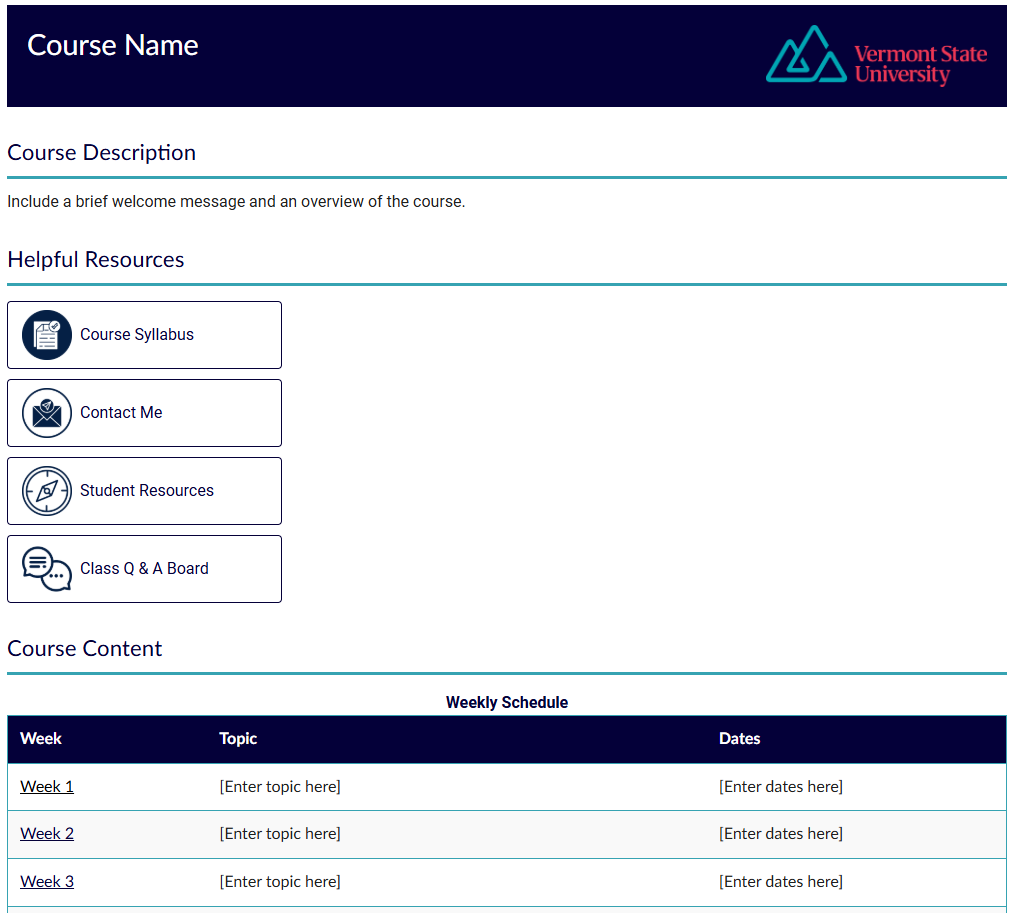
The Canvas Course template has been rebranded and is now available in Canvas Commons. In addition to aesthetic improvements, the template is 100% digitally accessible and includes some added functionality, such as the addition of “Return to Home Page” links for student convenience.
In addition to the template itself, the Canvas Template Adoption Guide has been updated to reflect the changes.
New Faculty – Getting Started Module
The New Faculty – Getting Started module has been updated for the 2026-2027 academic year. This module is introduced to new faculty members during their orientation to the university, but the information and resources presented in it could be helpful to all members of the institution. The module includes the university’s mission, vision, and community values, as well as institutional, faculty, student support, and teaching resources.
This year’s iteration includes the integration of the Teaching Effectiveness Framework as well as some policy and procedure updates. There are still several resources, however, that will be updated over the summer as the information becomes available. Anticipated changes have been noted within the module.