March 2026 | Volume 3 | Issue 8 | Previous Issues
Each month, this year, we’re highlighting at least one teaching tip from one domain of the Teaching Effectiveness Framework (TEF). Our teaching tip for this month comes from the Student Motivation domain. When students are intrinsically motivated, they are more likely to engage in deep learning, less likely to be academically dishonest, and more likely to persist in their education.
Maximizing Successful Group Work
The mere mention of group work in college often elicits groans. Many of us can likely recall our own experiences of uneven workload distributions, challenging communication, and perhaps even the feeling of “I could have done this better on my own.”
However, when group work is intentionally designed and connected to course/program objectives, it has the potential to boost student engagement, deepen learning, and provide an opportunity to develop and practice critical collaboration skills.
Like many pedagogical strategies, there are variables that impact the effectiveness of group work. Successful group projects should be carefully designed by the instructor. Additionally, the students must be taught how to work effectively in groups, with ongoing support for navigating emergent dynamics.
Let’s start by exploring key design choices:
Careful pre-planning is only half of the picture. The second half of the picture is teaching students how to effectively build trust within and navigate the dynamics of their groups.
Tuckerman & Jensen (1977) identified the five stages of group development: forming, storming, norming, performing, and adjourning. While each group will move through these stages on different timelines, pertinent and well-timed class activities should assist in increasing group functionality.
Let’s consider some ways to effectively use class time to help students work effectively together:
References and Resources
Drew, C. (2023, August 29). 21 Group Roles for Students (List of Examples). https://helpfulprofessor.com/group-roles-for-students/
Johnson, D. W., Johnson, R. T., & Smith, K. (2007). The state of cooperative learning in postsecondary and professional settings. Educational Psychology Review, 19(1), 15–29. https://doi.org/10.1007/s10648-006-9038-8
Karau, S. J., & Williams, K. D. (1993). Social loafing: A meta-analytic review and theoretical integration. Journal of Personality and Social Psychology, 65(4), 681–706. https://doi.org/10.1037/0022-3514.65.4.681
Li, R. (2023). How can group work be more effective in classroom? Lecture Notes in Education Psychology and Public Media, 6, 255-261. https://doi.org/10.54254/2753-7048/6/20220302
National Associate of Colleges & Employers. (n.d.) Career readiness competencies. https://naceweb.org/career-readiness/competencies/career-readiness-defined#competencies
Page, C., Perera, N., & Gedak, L. (2020). Facilitating Student Collaboration in Groups and Teams. Kwantlen Polytechnic University. https://kpu.pressbooks.pub/groupwork/
Thom, M. (2020). Are group assignments effective pedagogy or a waste of time? A review of the literature and implications for practice. Teaching Public Administration, 38(3), 257–269. https://doi.org/10.1177/0144739420904396
Tuckman, B.W. & Jensen, M.C. (1977). Stages of small-group development revisited. Group and organizational studies, 2(4): 419–27.
Western Michigan University. (n.d.). Group norms. Teaching and Learning. https://wmich.edu/x/teaching-learning/teaching-resources/activities/group-norms
Wilson, K. J., Brickman, P., & Brame, C. J. (2017). Evidence-based teaching guide: Group work. CBE—Life Sciences Education. http://lse.ascb.org/evidence-based-teaching-guides/group-work/
Zhang, B., & Ohland, M. W. (2009). How to assign individualized scores on a group project: An empirical evaluation. Applied Measurement in Education, 22(3), 290–308. https://doi.org/10.1080/08957340902984075
Sarah Silbert
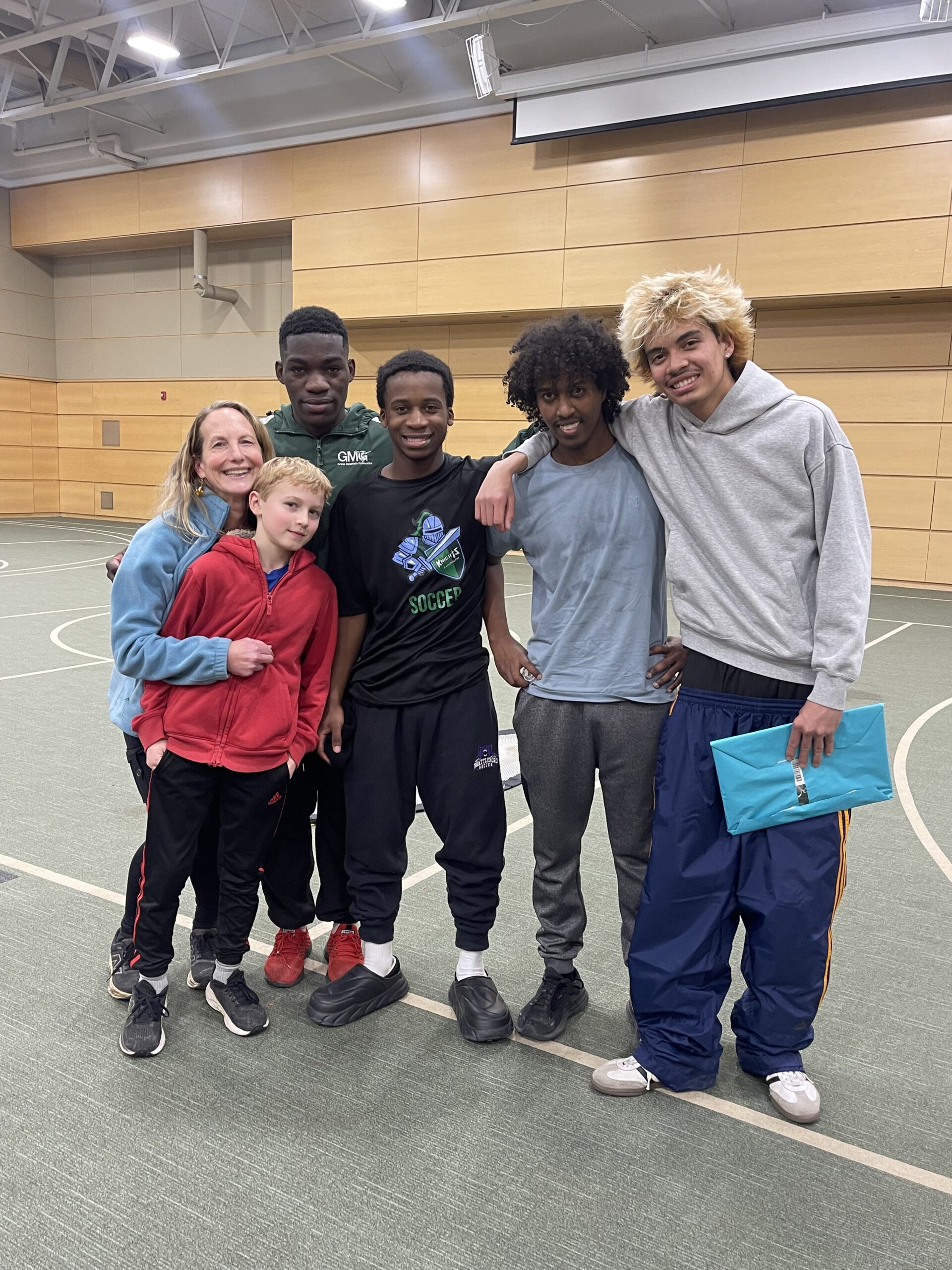
This month, we have the pleasure of featuring Randolph based professor, Sarah Silbert, who teaches in the English department and recently coordinated a few free soccer clinics for local youth in VTSU’s Judd Gym.
Please tell us a little bit about your background and what brought you to VTSU.
I did what everyone told me what not to do: I was twenty-six and happened upon an idyllic bit of forest for sale in Braintree, Vermont. “You can’t move anywhere without a job,” people advised me, but I had already fallen in love with the land and was making plans to build a post-and-beam cabin. I moved from Boston to Braintree January 1998, the same month I graduated with a master’s in fine arts in creative writing. Up until that point, I’d been teaching creative writing workshops around the clock up and down the East Coast in every kind of setting: libraries, hospitals, correctional facilities, prep schools, public schools and private homes. I was visiting with the Career Center Director at VTSU’s Randolph campus to chat about local opportunities when an electro-mechanical professor ran in and announced: “I need a Freshman Comp instructor for 30 students starting next week!” I promised to deliver a resume by 8 am the next morning and have been working here ever since.
Are there any specific strategies you use to increase or maintain student motivation?
Writing is a powerful tool of illumination: it reveals one’s deepest wishes, hidden fears, truest loves. To motivate students, I just have to get out of the way so they can experience the rewards of writing directly. Then they’re hooked. The first couple weeks of the semester can feel tricky because I have to dissolve the power dynamics of the classroom: no judges or evaluation of any kind are allowed because they will distort what students allow to show up in their writing. At the same time, the students and I exist in a situation where GPA’s matter. So I have to convince students that taking risks earn better grades.
To be specific:
- I begin every class with a warm-up question. “Name one achievement of your last week ~ What’s one thing you miss from home ~ What’s one goal you have for this semester ~ What’s your favorite Thanksgiving food?” A lot of students will try to answer with a single word, yet in the spirit of good writing (give specific details! appeal to all five senses!) I push them to expand on their answers. Connections grow this way, and students see firsthand the power of generalities growing into creative language.
- Students and I workshop every assignment in class. For a large class, I’ll ask for a couple volunteers, and I’ll project their essays on the smartboard so we can read them together and remark on what we love and help with revising troubled spots. VTSU Randolph students are hands-on learners, and they engage with this activity the same all-in way they would pitch in with fixing an engine or conducting a medical experiment. We pool our minds together and learn firsthand that writing is rewriting – and rewriting and rewriting again. We also learn to trust each other because we are sharing our personal stories and getting to know each other deeply. I ask for new volunteers for every assignment so every student is “on the board” at least once, ideally twice.
- I always return assignments the next class after their due date. Students have so much going on: college, jobs, relationships, pets, cars, etc.. I want to give them feedback when their assignments are still fresh in their minds, so we don’t lose momentum. Also, they need my feedback so they can know how to improve before the next assignment arrives.
- I invite guest speakers and schedule field trips. October and March are the hardest months of the year for our students: the flu spreads, fatigue reigns, and every couple seems to break up during these bleak months. I try to rev students’ engines by bringing new voices into the classroom and getting out of our usual four walls. Guest speakers can even be in-house: for example, I often invite the Career Services Director to talk about the latest trends in the labor market and current internship opportunities. As for “field trips,” a different place on campus can suffice if transportation is difficult. For example, to practice oral presentations I have taken students to the soccer fields where we shout our speeches into the wind from one goal post to the other.
- I take time to see my students outside of class. More than anything else I do, this effort has the most dramatic effect – a thousand times over. Most students at VTSU Randolph find the classroom a tough place to be, where they are neither comfortable nor confident. Yet, they always have an expertise of their own, and they literally glow when I show up on their turf. Whether I am witnessing them kill it on the basketball court, herd cows, fix brake lines, or even reign supreme on a video game, they lead the show; they get to teach me about what they know. Once this shift occurs, they transform in my classroom and are much more open and vocal.
What important lessons have you learned from VTSU students that have shaped you as a teacher?
I learn one lesson over and over again: life is so utterly unpredictable. One can have an intention for the next month or season or year, and in a single second get knocked six hundred miles off course. For our students to commit to earning a two-year or four-year degree is beyond brave: they are investing in a future that is expensive and wildly uncertain. My 28 years of teaching at VTSU Randolph has taught me that I have an enormous responsibility to help our students navigate what life throws at them as they pursue their degree. For example, I have a strict attendance and deadline policy. “I want you here,” I say at least a hundred times a semester. However, I excuse students from class for a plethora of reasons. Last semester, I had a student who was working full-time as well as taking 16 credits, and I excused him from my 8 AM class one day just so he could catch up on sleep. (He had started to look really tired.) Other students have sudden deaths in the family, and I work with them one-on-one until they can get back to campus, sometimes for weeks. Of course, all teachers need to uphold standards around professionalism and work ethic. I try to run my classroom the way I would run a business, expecting the best of my employees while also lending them compassion when hardships arise.
What are your favorite things about your field or discipline?
I love writing. I wake up at 4 am every day so I can have time to enjoy writing before waking up kids and getting us all to school and work. Writing can free up one’s imagination so one can dream without limits and access more opportunities, and it can also hone one’s focus by stripping away all distractions and delusions. The only thing I love more than writing myself is helping others use the process of writing to grow their own imaginations and to regain their own focus. All that said, what keeps me here at VTSU Randolph is a genuine love of the students. It feels like magic: students who come here are earnest, honest, hard-working, a bit shy, and often new to writing, yet by Week 2 or 3 of every semester, they are digging into their writing projects and into their own selves with courage and excitement. I’ve worked here almost three decades, and every single semester still feels new and fresh.
Guest Presenter: Dr. Liz Norell
Workshop: When and why do students read for class?
Drawing from survey data and focus group findings from a spring 2025 pilot project, this workshop will share the biggest reasons students say they choose to skip the readings for their undergraduate courses. We’ll then share strategies on how to make the goals of course readings more transparent and meaningful for students, with plenty of time for Q&A. Attendees will leave with a clearer understanding of students’ perspectives on course readings and ideas for how to frame the importance of the readings so students can engage with course materials more effectively.
- Date: Monday, March 9th
- Time: 12noon-1pm EST
- Location: Zoom (faculty – check your calendar for an invitation with a link)
About Liz:
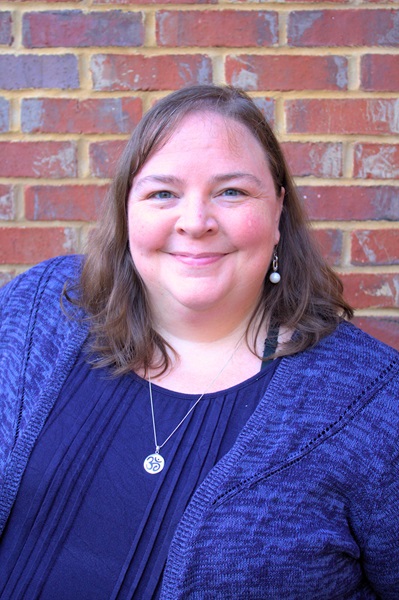
Dr. Liz Norell serves as Associate Director of Instructional Support in the Center for Excellence in Teaching and Learning (CETL) at the University of Mississippi. She has spent more than 20 years teaching in higher education, including stints in composition, journalism, new media, and political science–much of that as an adjunct faculty member teaching simultaneously at multiple institutions, including community colleges. She completed a PhD in political science at the University of Texas Dallas. Liz’s first book, The Present Professor: Authenticity and Transformational Teaching, is published in the University of Oklahoma Press’s brand-new series, Teaching, Engaging, and Thriving in Higher Ed, co-edited by James Lang and Michelle Miller. Liz is passionate about equitable, inclusive teaching, constructive conversations across differences, and fostering meaningful learning. She is also dedicated to boosting awareness of disability in higher education. You can find Liz on social media (@liznorell) and at her website, liznorell.com.
Presentation from the 2025-26 AI Faculty Learning Community
Register Now: Best Practices and Lessons Learned
A faculty learning community (FLC) is a small interdisciplinary peer-led group who engages in a collaborative program focused on building a sense of community and enhancing teaching and learning. During the 2025-2026 academic year, the CTLI-sponsored FLC focused on generative AI, and the members have developed a series of recommendations and best practices to share with their faculty peers.
- Format: Presentation followed by a participant panel
- Date: Wednesday, May 6th, from 3:00-4:15p
Learn more about the event, which will be held on Zoom, and register for it at your earliest convenience.
The Center for Teaching & Learning Innovation
Digital Accessibility Skills Series with Jeff Tunney
This workshop series is geared toward faculty and staff members with a basic knowledge of sound digital accessibility practices. The workshops will include hands-on activities that align with accessibility learning modules developed by the CTLI over the past several months and participants are encouraged to review the applicable modules prior to each scheduled session.
Registration
While you are welcome to attend all of the remaining sessions, we also invite faculty to come to some of the sessions based on interest in the topic or schedule availability. Register now for one or more sessions!
Workshops:
March 16: Writing Alt Text, Image Descriptions, and Captions
March 30: Exploring Alternatives to PDFs
April 13: Developing Accessible Emails
The VSC IT Learning Technologies Team
Panorama Playground Series with Sarah Chambers
Panorama Playgrounds are interactive, hands-on workshops designed to help faculty improve the accessibility of their courses using YuJa Panorama.
Each session focuses on a specific type of content—Canvas pages, Word documents, PDFs, and Math formulas. Practicing skills using your own course is recommended. Questions are encouraged.
Registration
Register online to attend the entire Panorama Playground Series or one or more of the individual workshops below.
Workshops:
Tuesday, March 3 – 11:00 AM – 12:00 PM
- Panorama and the Canvas Rich Text Editor
- Remediating text inside of Canvas (assignments, pages, quizzes, etc.)
Friday, March 6 – 11:00 AM – 12:00 PM
- Panorama and Word/PowerPoint/Excel
- Remediating Microsoft Office 365 documents with Panorama
Wednesday, March 11 – 1:00 – 2:00 PM
- Panorama and Word/PowerPoint/Excel
- Remediating Microsoft Office 365 documents with Panorama
Monday, March 16 – 1:00 – 2:00 PM
- Math formulas
- Options for creating accessible math formulas
Friday, March 20 – 11:00AM – 12:00 PM
- Math Formulas
- Options for creating accessible math formulas
Monday, March 30 – 1:00 – 2:00 PM
- PDFs and Accessibility
- Options for remediating PDFs
Tuesday, March 31 – 11:00 AM – 12:00 PM
- PDFs and Accessibility
- Options for remediating PDFs
Building Anti-Racist Educators: Reading & Inquiry Series
This Reading and Inquiry Series provides a monthly set of tools for learning, introspection and having conversations about issues of racism in our university, classrooms and communities. We hope that through regular reflection and conversation, you can get better at recognizing and resisting your biases and the impact they have on your students and colleagues.
Meetings:
The group will be meeting via Zoom on the following dates:
- Thursday, March 19th (3:00-4:30p)
- Thursday, April 16th (3:00-4:30p)
- Thursday, May 21st (3:00-4:30p)
How to Sign-up:
To receive a calendar invitation, Zoom link, and access to the group’s Canvas space, please fill out the Vermont State Colleges Building Anti-Racist Educators Sign-Up Form.

Spring Series on Writing & Generative AI
The CTLI and Castleton Writing Coordinator are collaborating to deliver a series of 5 professional development sessions for faculty in the Spring 2026 semester on the topic of generative AI and writing in the college classroom.
While you are welcome to attend all of the available sessions, we also invite faculty to come to some of the sessions based on interest in the topic or schedule availability. These Monday sessions (from 12pm-1pm EST) are open to people with all levels of experience with generative AI. Register for one or more!
- March 30, 2026 @ 12:00 pm – 1:00 pm
Navigating AI when Teaching Research & Information Literacy
- April 27, 2026 @ 12:00 pm – 1:00 pm
An Emphasis on Learning while Writing with AI: Transparency, Accountability, & Innovation - May 11, 2026 @ 12:00 pm – 1:00 pm
Reflecting in Community: Learning & Next Steps
Upcoming Workshops
Note: All upcoming events can be viewed on the CTLI Events calendar. See below for the next 10 sessions.
- March 3 @ 11:00 am – 12:00 pm
Spring 2026 Panorama Playground Series: Panorama and the Canvas Rich Text Editor
- March 6 @ 11:00 am – 12:00 pm
Spring 2026 Panorama Playground Series: Panorama and Word, Powerpoint, Excel
- March 9 @ 12:00 pm – 1:00 pm
Guest Workshop: Dr Liz Norell – When and why do students read for class?
- March 11 @ 1:00 pm – 2:00 pm
Spring 2026 Panorama Playground Series: Panorama and Word, Powerpoint, Excel
- March 16 @ 12:00 pm – 1:00 pm
Spring 2026 Digital Accessibility Series: Writing Alt Text, Image Descriptions, and Captions
- March 16 @ 1:00 pm – 2:00 pm
Spring 2026 Panorama Playground Series: Math Formulas
- March 19 @ 3:00 pm – 4:30 pm
Building Anti-Racist Educators: Reading & Inquiry Series – March Meeting
- March 20 @ 11:00 am – 12:00 pm
Spring 2026 Panorama Playground Series: Math Formulas
- March 23 @ 12:00 pm – 1:00 pm
Program Assessment: Collecting and Evaluating Indirect Evidence
- March 27 @ 2:00 pm – 3:00 pm
Program Assessment: Drop-In Office Hours
As you likely know, starting in April 2026, all public higher education institutions of our size must be compliant with new regulations for accessibility of digital content. The regulations are based on the WCAG 2.1 AA standards, which are written for a technical audience.
In the CTLI, through the EdPros workshops, reading, and research, we have been gaining knowledge of digital accessibility. And we are creating tutorials on some of these key skills for faculty, translating the technical standards for general users. We are collating digital accessibility resources on our webpage for easy access, as well.
Check out our eighth tutorial on Developing Accessible PowerPoints. And see if you can ace the knowledge check at the end!
Previous Tutorials:
- Top 5 Best Practices for Creating Alt Text, Image Descriptions, and Captions
- Top 5 Best Practices for Structuring Accessible Documents
- Top 5 Best Practices for Creating Accessible Hyperlinks
- Top 5 Best Practices for Selecting Accessible Color Combinations
- Top PDF Alternatives
- Panorama Best Practices
- Best Practices for Writing Accessible Emails
If you have feedback on the tutorial or topics you’d like to see us cover in future months, let us know by emailing ctli@vtsu.edu. Thank you so much.
The VSC IT Learning Technologies Team
The VSC IT Learning Technologies Team assists VSC faculty with instructional and classroom technologies. Visit the Learning Technologies SharePoint Site for staff info, service details, upgrade notifications, classroom guides, and on-demand support.
Canvas Updates
- VTSU Spring 2026 courses that begin March 18th will be published and available to students on March 11th. Students that are registered for a course beginning March 18th and do not see it in their Canvas Dashboard on March 11th should submit a ServiceDesk ticket.
- VTSU Summer 2026 Canvas courses are now available to faculty only.
Membership Benefits: Online Learning Consortium (OLC)
Did you know that the VSC pays for faculty and staff OLC memberships? Create your OLC account using your @vsc.edu email to enjoy access to resources to help with your online teaching and learning goals and objectives!
Follow these steps to get started and take full advantage of available resources:
- Create Your OLC User Account: Set up your personal OLC User Account and profile to unlock member benefits. Be sure to use your @vsc.edu email address during registration to verify your affiliation and ensure access to all member features.
- Stay Informed with OLC Today: Subscribe to OLC Today, a weekly newsletter highlighting the latest developments in online learning and education. You can also update your subscription preferences at any time to tailor the information you receive.
- Explore OLC Resources: Visit the OLC Home Page to discover a variety of free resources available to you. After logging in, explore the new OLC Course Review Scorecard, now featuring an Assistant GPT feature. You can also sign up to watch OLC Webinars, both live and on-demand, and delve into the OLC Research Center for research and insights.
- Advance Your Learning and Career: Take time to recharge and invest in your professional growth. Review the offerings of OLC Online Teaching Certificate Programs and consider enrolling to elevate your teaching skills and career trajectory.
For help from the VSC IT Learning Technologies Team, please submit a ServiceDesk ticket.

VSCS Libraries
Help Us Build the Library Collection!
We are always looking for print and electronic book recommendations to strengthen our collections. We’d love to get your book suggestions, whether it’s for your research or for your students, send us your recommendations!
March Virtual Displays
We have two virtual displays this month: Pi Day and Open Education Week. Be sure to check them both out below:
WCAG 2.1 Level AA Standards
If you are using library resources in your curriculum and you aren’t sure whether they meet current accessibility guidelines, we are here to help. Our goal is to ensure that all third-party resources are accessible to the entire VSCS community, so do not hesitate to reach out to us.
Library Service Usage Statistics
We are excited to share our statistics from the last two academic years with you.
- Library gate counts help us see how our spaces are used so we can staff wisely, support security, and keep our environments welcoming. Across our four physical campuses, visits increased 7.27% from AY ’23–24 to AY ’24–25. After Williston added its counter in November 2024, the full system showed a combined 26.66% increase in traffic. Our libraries are clearly busy, well-used spaces.
- Interlibrary loan (ILL) activity gives us a clear picture of what our users need beyond our shelves. Tracking this use helps us spot collection gaps, guide spending, and keep our borrowing and lending services running smoothly and compliantly. Between AY ’23–24 and AY ’24–25, ILL requests jumped 67.79%, highlighting strong demand and the value of sharing resources across our system.
- Circulation data gives us a snapshot of how our physical collections are being used, so we can keep things accessible and make smart choices about what to add—or retire. Between AY ’23–24 and AY ’24–25, circulation dipped 4.23%. This drop likely reflects the growing availability of high‑quality online resources, including our expanding eBook collection, as well as our recent weeding project and the steady addition of new materials. Altogether, these shifts help keep our collections timely, relevant, and aligned with what users need.
- Tracking eResource use helps us understand how our digital collections support teaching, learning, and research. Usage data guides smart, data‑driven decisions—making sure our subscriptions stay relevant, cost‑effective, and aligned with what our community actually needs. Between AY ’23–24 and AY ’24–25, eResource use rose 27.87%, showing strong engagement with our digital materials and the continued importance of investing in online access.
- Monitoring Subject Guide usage helps us understand which research guides resonate with users so we can keep content relevant, easy to navigate, and worth the time we put into creating it. These insights also support smart resource allocation and continuous improvement. Between AY ’23–24 and AY ’24–25, Subject Guide usage increased 10.72%, showing growing engagement with these online research tools.
- Monitoring ticket requests sent to libraries@vsc.edu helps us respond quickly, stay organized, and ensure every patron question gets the attention it deserves. Tracking this activity also highlights trends that help us improve services over time. Between AY ’23–24 and AY ’24–25, email ticket volume grew 17.74%, reflecting increased engagement and the continued importance of responsive library support.
- Tracking chat reference activity helps us understand how users seek help online and ensures we’re offering timely, accurate digital support. Monitoring these interactions also highlights trends, guides staff training, and strengthens the overall quality of our virtual reference services. Between AY ’23–24 and AY ’24–25, chat reference requests decreased 17.44%, offering insight into shifting user preferences and how we can continue adapting our online support.
Vermont Reads Book Clubs: The Light Pirate
Vermont Reads is a statewide reading program run by the Vermont Humanities Council. The VHC selected The Light Pirate by CCV alum Lily Brooks-Dalton as this year’s reading book.
Get the Book
- Print Copies: Copies are available at every campus library! If you don’t live near a campus library, you can request to check out the book and have it sent to your home.
- Ebooks & Audiobooks: It is available through the Libby app as an eBook and audiobook for public library patrons whose libraries offer Libby, and on other platforms.
Join the Discussion
The VSCS Libraries will host book club discussion events on Microsoft Teams. These are informal, drop-in events open to all VTSU and CCV students, faculty, and staff.
Also look for Vermont Reads events around the state.
- Tue, Mar 3 | 7:00–8:00 PM
- Wed, Mar 4 | 12:00–1:00 PM
Multilingual Student Services
This is the first in a series of discipline specific articles written by Dr. Mary Dinh, Vermont State’s Associate Director of Multilingual Student Services.
How to Study Effectively in Your First Year of Nursing
Starting nursing school in English can feel challenging, especially when your students are learning both new content and new language at the same time. The good news is that research shows there are clear strategies that help multilingual students learn faster, remember longer, and feel more confident. Here are some high impact study strategies that work that you can share with your students.
Test Yourself Often
Reading notes again and again feels safe, but it does not help memory. Instead, quiz yourself using flashcards, practice questions, or short self made quizzes. If you cannot remember an answer yet, that is normal. Testing helps your brain learn.
Study in Short Sessions Across Many Days
Do not wait until the night before an exam. Study for short periods several times a week. Returning to the same material helps your brain store it in long term memory.
Break Medical Words into Parts
Many nursing terms come from Greek and Latin. Learn to recognize prefixes, roots, and suffixes. When you understand the parts, new words become easier and less scary.
Example:
cardio means heart
itis means inflammation
cardioitis means inflammation of the heart
Connect New Words to Meaning
Do not only memorize definitions. Add meaning by:
- creating a picture in your mind
- connecting the word to your body or experience
- grouping similar words together
- explaining the word in simple English
Learn Spelling and Pronunciation Together
Say the word out loud. Write it from memory. Then check yourself. Hearing, saying, and writing a word together helps accuracy and confidence in class and in clinical settings.
Use Study Groups with Purpose
Studying with others can help if the group is focused. Good group activities include:
- quizzing each other
- teaching a term to a classmate
- applying vocabulary to a case example
Avoid groups that only reread slides or chat without a goal.
Use Technology as a Starting Point, not the Final Step
Looking up words online is helpful. But learning happens when you return to the word later, test yourself, and use it again.
A Simple Study Routine Learning Medical Terminologies
Step 1. Find the meaning
Look up the word and make sure you understand the definition.
Step 2. Break the word apart
Identify prefix, root, and suffix. Say the meaning in your own words.
Step 3. Make one memory connection
Choose one method such as a picture, a personal example, or a simple explanation.
Step 4. Practice form
Say the word out loud. Write it once from memory. Check spelling.
Step 5. Test yourself again later
Test the same word later that day, then after two days, one week, and two weeks.
Step 6. Do not skip new words
Skipping words makes future learning harder. Every term builds on another.
If you have any concerns about a student’s success in the program because of their English proficiency, we offer both online one on one ESL tutoring and in person ESL tutoring for Nursing and Allied Health Sciences students on the Castleton and Williston campuses. Please email Dr. Mary Dinh at Mary.Dinh@VermontState.edu to refer students and add them to our tutoring schedule.