August 2026 | Volume 4 | Issue 1 | Previous Issues
Teach Growth & Fixed Mindset
In 2026-27, we will be focusing teaching tips, programming, and the Teaching Effectiveness Certification on the Student Motivation domain of the Teaching Effectiveness Framework.
Mindset and motivation are intimately connected. Students with a fixed mindset often do not persist through difficulties, falsely believing that they will never have the brains or skills to be successful. Whereas students with a growth mindset understand that with the right effort and resources, they can develop knowledge and skills in any discipline.
Cultivating growth mindset beliefs, behaviors, and habits is a way that faculty can help encourage student motivation.
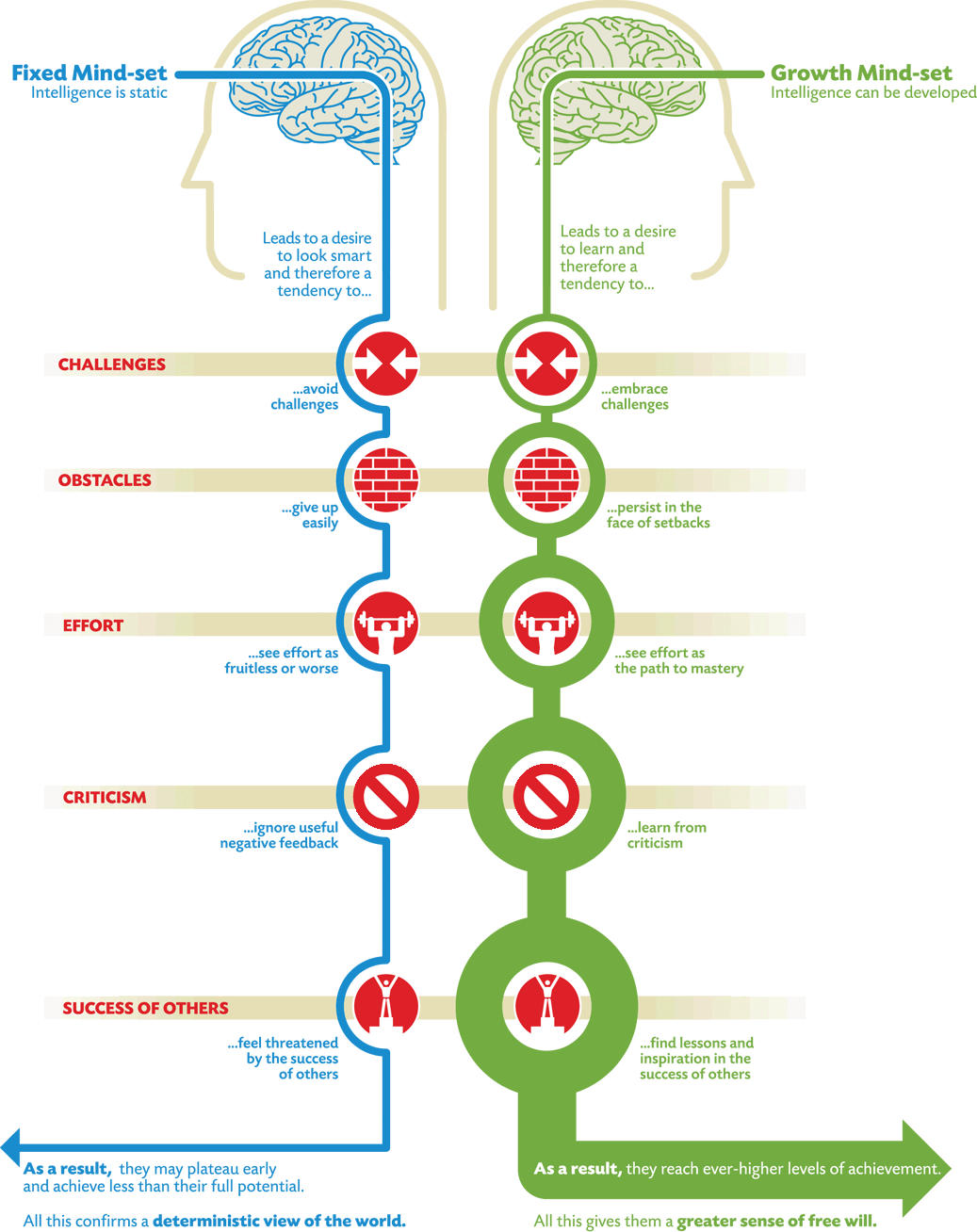
Psychologist Carol Dweck (2016) has studied mindset in students. This is a powerful framework for helping students understand their habits of mind and their approaches to activities that feel difficult.
Reference: Dweck, C. S. (2006). Mindset : The new psychology of success. Random House.
With a fixed mindset, students believe that their talents and intellect are fixed and their performance is predetermined (e.g., “Of course I failed that test – I’m not a math person”). When we operate with a fixed mindset, failure is confirmation of this personal weakness.
When we operate with a growth mindset, we see failure as a learning opportunity (e.g., “I missed that question on the knowledge check quiz, but I can examine what I did wrong and discover strategies to improve”). When students are encouraged to learn from failure or mistakes by reflecting on what went well and what they could adjust or change, they are guided toward a growth mindset.
A growth mindset can counteract stereotype threat (Canning et al., 2022; Lee et al., 2024), a common source of imposter syndrome, in which people may have absorbed implicit messages about how they are expected to perform based upon some aspect of their identity and corresponding social stereotypes.
Teach students about mindset
Have students watch short videos and read a popular news article to learn about mindset:
- What is Growth Mindset? (~3 minute video)
- Neuroplasticity(~2 minute video)
- Carol Dweck’s TED Talk — The Power of Believing that You Can Improve (~10 minute video)
- Growth Mindset: Clearing Up Some Common Confusions (a short article)
Then have students discuss with each other how they have experienced mindset in life and/or education. You could also have them explore scenarios and ask how a student with a fixed mindset or a growth mindset might approach the situation.
Thoughtfully choose your mindset messaging
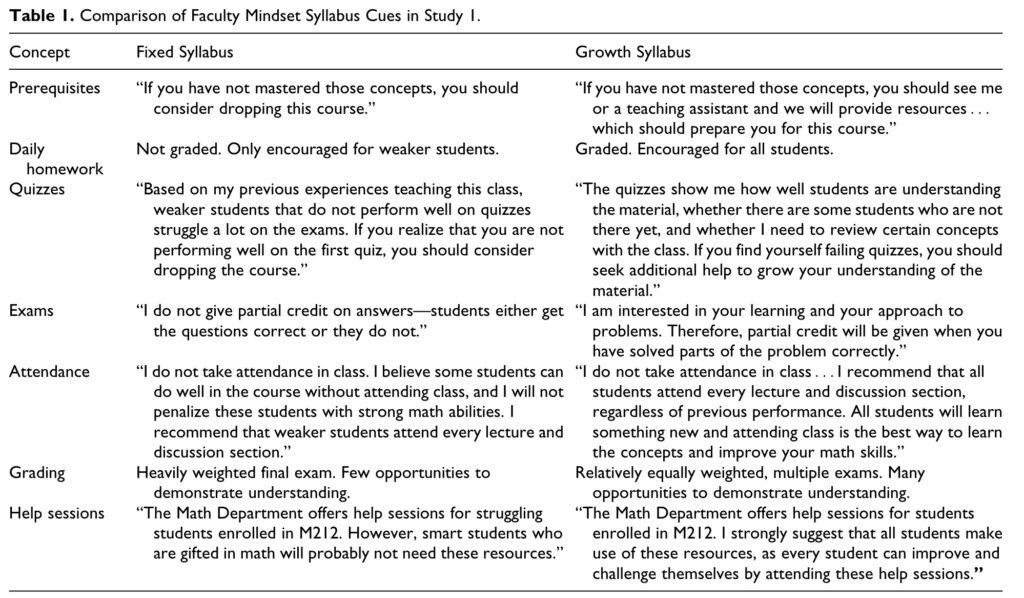
Faculty also benefit from examining their mindset about students and how that perspective may be communicated in ways that are harmful or helpful. For instance, researchers (Canning et al., 2022) conducted a study that exposed a “causal relationship between perceived faculty mindset beliefs, the psychological experience of stereotype threat, and women’s performance in STEM” (p. 9). Simple changes to syllabi language or spoken words in the classroom, then, can positively influence student performance, especially those who might typically be marginalized in a particular environment or discipline, when they shift from a fixed mindset tone to a growth mindset tone (Table 1).
Model growth mindset and productive effort
Being human and sharing examples of your own encounters with mindset can be motivating for students. For instance, if there is a particularly challenging concept that it took you significant effort to master, share with students your process, effort, and how you combatted any instincts toward a fixed mindset. Often fixed mindset shows up in the “self-talk” that we express in our heads as we encounter something difficult. Share with students how you recognize and reframe fixed mindset self-talk to encourage your own growth mindset.
If you are asked a question for which you don’t have a ready answer, be honest and explain to students the process you’ll pursue to respond with confidence. In the next class, show them how you learned the information and how you used a growth mindset to persist if you encountered any difficulties.
Encourage learning from mistakes by lowering stakes
The college classroom is a really excellent place to take risks, fail, and learn from errors. Often, students may avoid taking intellectual risks for fear of such failure affecting their grade. When faculty structure their classes to include no- or low-stakes opportunities and encourage students to stretch their capacities with a growth mindset, students are likely to engage in deep learning. When these low-stakes opportunities are scaffolded into a summative assignment that may be higher stakes, they have an opportunity to reflect on their mistakes and demonstrate further learning.
References and Additional Resources
Canning, E. A., Ozier, E., Williams, H. E., AlRasheed, R., & Murphy, M. C. (2022). Professors who signal a fixed mindset about ability undermine women’s performance in STEM. Social Psychological and Personality Science, 13(5), 927–937. https://doi.org/10.1177/19485506211030398
Dweck, C. S. (2006). Mindset : The new psychology of success. Random House.
Lee, A. A., Totonchi, D. A., Priniski, S. J., Lee, M., Perez, T., & Linnenbrink-Garcia, L. (2024). Do performance goals and fixed mindset explicate the relations between stereotype threat and achievement? Examining differences between racially marginalized and White students in STEM. Learning & Individual Differences, 115, N.PAG. https://doi.org/10.1016/j.lindif.2024.102525
Yeager, D. S., & Dweck, C. S. (2020). What can be learned from growth mindset controversies? American Psychologist, 75(9), 1269–1284. https://doi.org/10.1037/amp0000794
To kick off the new school year, we decided to spotlight several Associate Academic Deans in their new roles, as they make the transition from their faculty roles. Get to know them and learn about their perspectives and priorities as they engage in these new leadership positions.
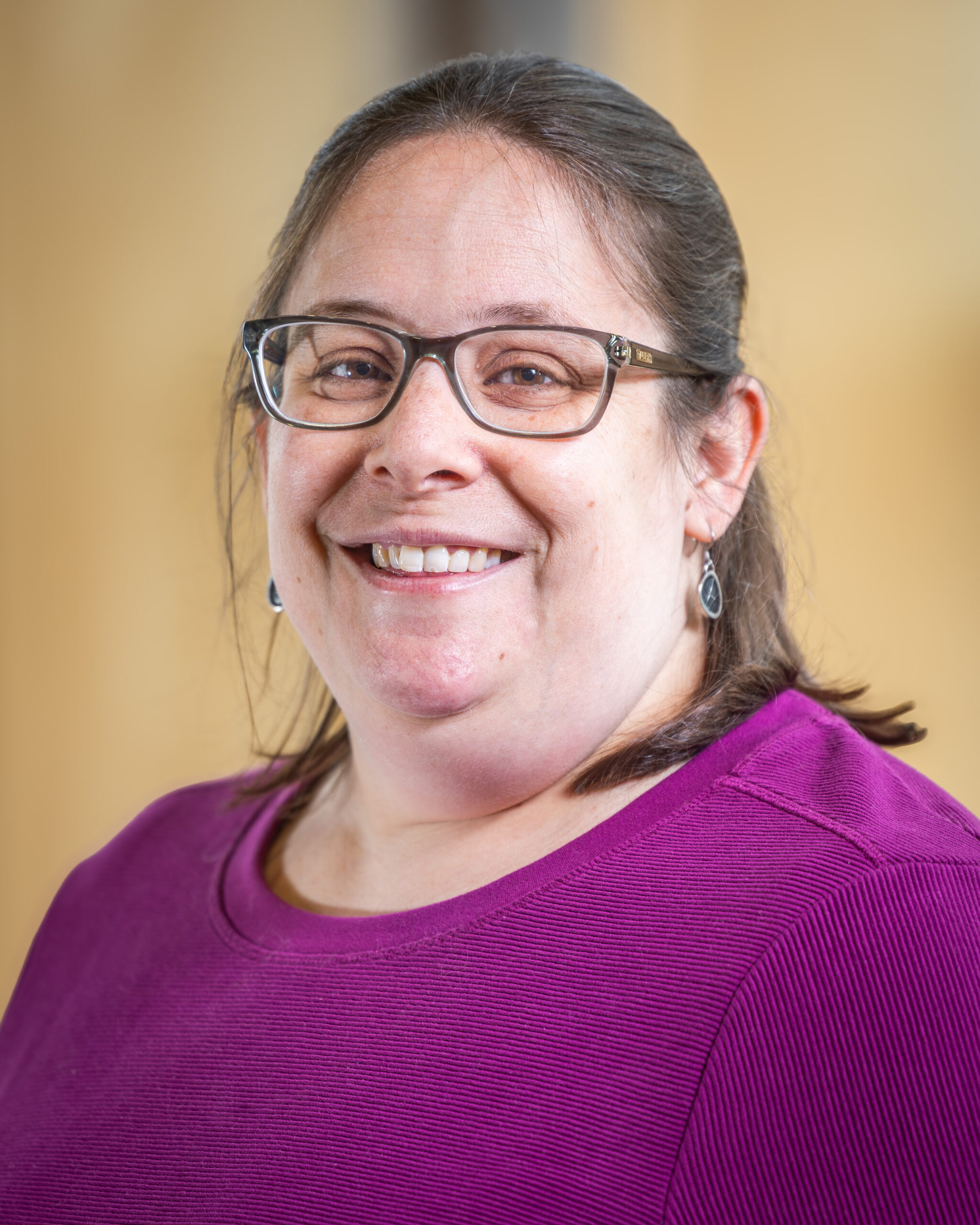
Meaghan Meachem, Associate Academic Dean
Schools of Arts & Communications and Education, Psychology & Social Science
When you think about the core teaching mission of VTSU and the related student learning experiences, what energizes you and gives you optimism for the future?
VTSU is usually ahead of the curve on innovating its coursework and student experiences to respond to needs of the industries and professions we are preparing students for. Our faculty are some of the best at what they do…many with connections to those industries and professions that they teach. And that’s unique, because many universities don’t have that. What energizes me is that our programs are constantly innovating in such a way that makes us some of the best at what we do. And our students and alumni are shining examples of that success…carrying the VTSU brand with them as they embark upon their post collegiate careers.
What are your priorities in your new role as Associate Academic Dean?
As someone rooted in the communications realm, one of my priorities is to help improve communication between administration and faculty. To be able to explain why things are happening a certain way, but to also be able to be a conduit to help connect faculty to administration to improve understanding of what’s happening in our classrooms and workforce environments to make smart, wholistic decisions.
Another priority of mine is to figure out creative ways to take strengths of programs that already exist and look at what’s happening in the workforce environment to find opportunities for additional enrollment and recruitment tactics.
What is something you enjoy doing, outside of work, that helps you maintain a healthier work-life balance?
Most know that for me to completely disconnect, I need to be inside the Disney bubble. It’s one of the only places where I can completely shut off the noise. But I also really enjoy traveling and exploring new places — so any opportunity I get, I usually snag.
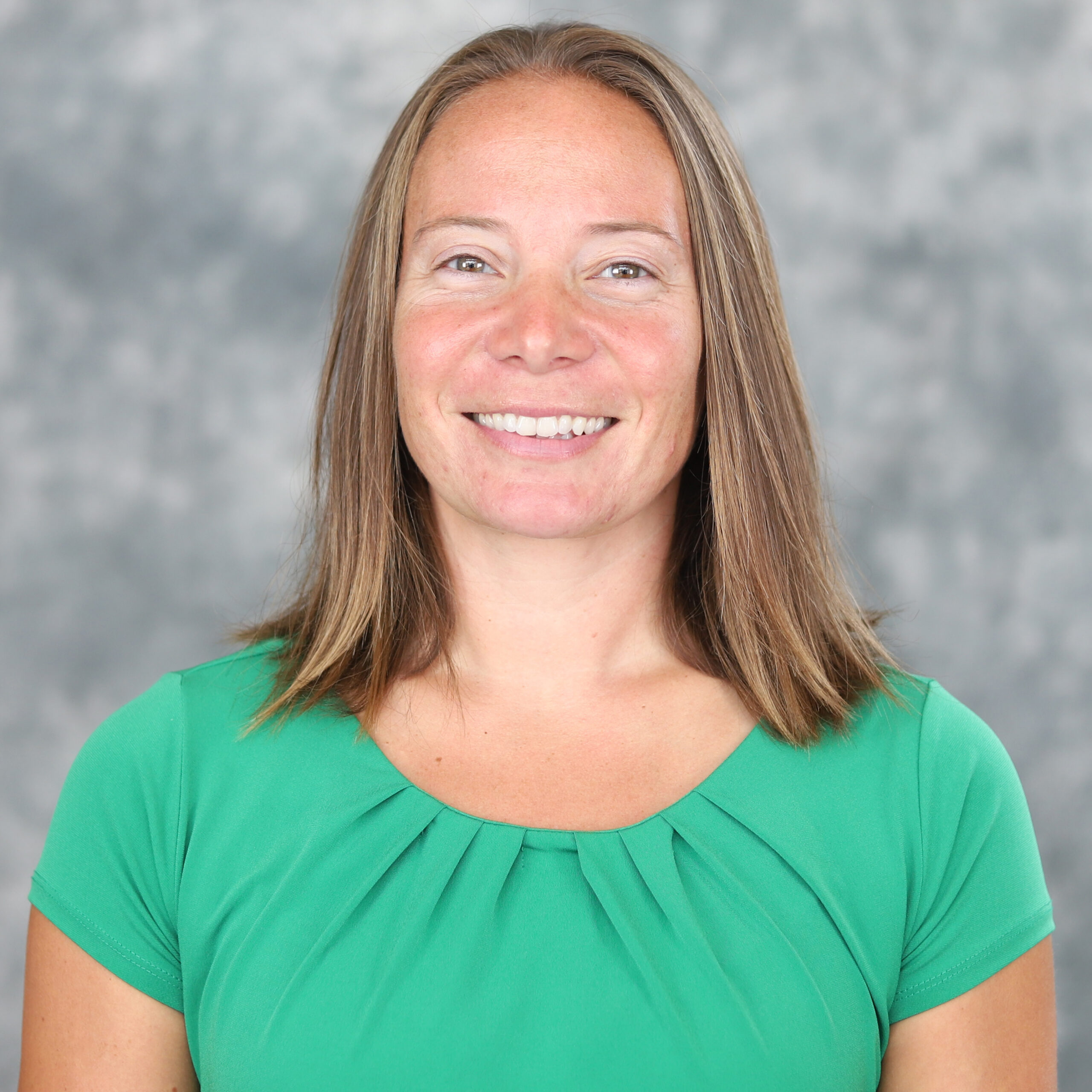
Rebekah Peterson, Associate Academic Dean
Health & Exercise Sciences, Natural Sciences, and Computer Science, Mathematics & Statistics
When you think about the core teaching mission of VTSU and the related student learning experiences, what energizes you and gives you optimism for the future?
What energizes me most is the shared commitment to students across VTSU. Whether I’m talking with faculty, staff, or leaders from different parts of the university, the conversation always comes back to the same goal: creating the best possible environment for student success. Each year, we welcome a new class of students who arrive with excitement and fresh perspectives. At the same time, it’s energizing to see returning students come back to campus ready to continue their educational journey and pursue new opportunities. Their enthusiasm, combined with the dedication of our employees, gives me great optimism for the future.
What are your priorities in your new role as Associate Academic Dean?
My first priority is to get to know the programs and departments I support, including the faculty, students, curriculum, and the unique strengths and challenges of each area. Several of these departments have been without a dedicated dean for some time, so I want to ensure they have a strong advocate and a clear line of communication. I strive to be an accessible and responsive leader who listens, helps navigate challenges, and works alongside faculty and staff to provide the highest-quality educational experiences for our students.
What is something you enjoy doing, outside of work, that helps you maintain a healthier work-life balance?
Spending time with my family is what helps me maintain balance. My two sons are involved in sports year-round, so much of my free time is spent traveling to practices, sitting in the stands, and cheering them on. With one son entering high school and the other entering sixth grade, I’m especially appreciative of this stage of life and try to make the most of every opportunity to be present and enjoy the journey with them.

Inge Smith-Luce, Associate Academic Dean
Department of Nursing, School of Nursing and Health Sciences
When you think about the core teaching mission of VTSU and the related student learning experiences, what energizes you and gives you optimism for the future?
What energizes me the most is celebrating the “wins”. This includes knowing our programs support students to develop the knowledge, confidence, and professional identity needed to make a meaningful difference in their communities. I am especially optimistic about VTSU’s commitment to accessible, high-quality education that prepares graduates to meet the evolving healthcare needs of Vermont and beyond.
What are your priorities in your new role as Associate Academic Dean?
My priorities are supporting faculty excellence, fostering student success, and strengthening collaboration across programs. I am committed to maintaining academic quality while helping create innovative, student-centered learning experiences that prepare graduates for the workforce and future leadership roles. I hope to model and support a growth mindset.
What is something you enjoy doing, outside of work, that helps you maintain a healthier work-life balance?
Outside of work, I enjoy spending time with my family and pets. I am and avid reader and love getting outdoors to walk, swim, and fish with my kids.
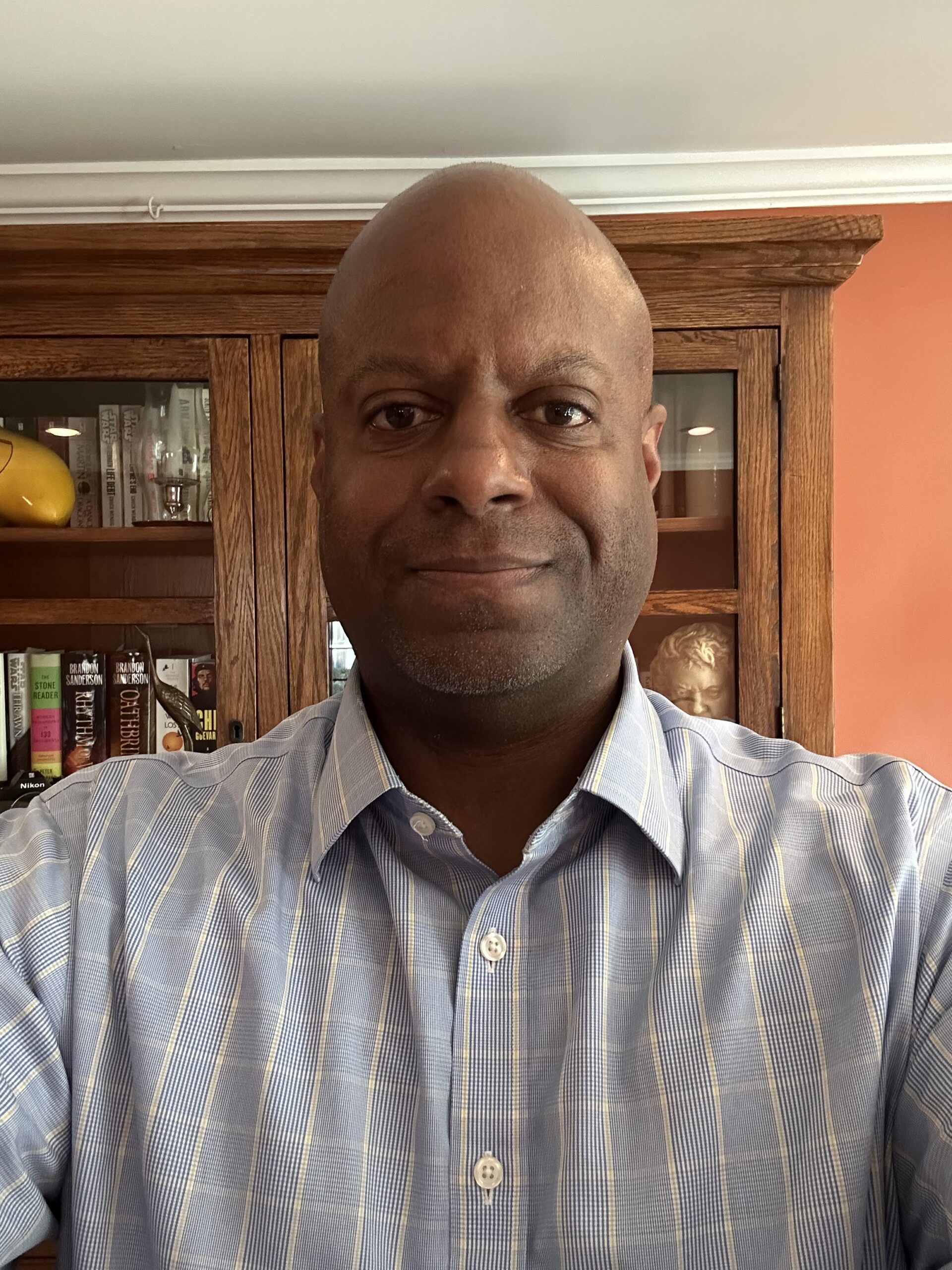
Roger Weeden, Associate Academic Dean
Health Professions and Engineering Programs
When you think about the core teaching mission of VTSU and the related student learning experiences, what energizes you and gives you optimism for the future?
VTSU offers many programs that offer hands-on training, practical skills that can translate and align with workforce needs. The system shows tremendous resiliency, most recently with consolidation and optimization. We have innovative offerings; I think of engineering and the learning that takes place in the labs; this is counterbalanced with rounding out the educational experience with our liberal arts courses. For instance, under the leadership of Department Chair John Kidder, the Green Mountain Work and Learn program creates an apprenticeship-based “gap year” for teens and the Engineering Bridge program allows hands-on experimentation with the field of engineering; both programs often lead to full matriculation at VTSU. I would be falling short if I did not mention the DEI commitment in the currently changing environment.
My optimism is rooted in the people who make the system what it is; the team of AADs I am teamed with whom I rely on for bouncing ideas off of and guidance for consistency of decision making; the work being done to offer programming that meets the dynamics of the workforce, partnerships within the community, industry.
What are your priorities in your new role as Associate Academic Dean?
Provide support for the programs overseen with their external accreditation site visits; collaborate with Program Coordinators and Chairs with support for faculty development initiatives for teaching excellence (metacognitive initiatives); support academic missions. Work with colleagues on complex projects; interdisciplinary program; support enrollment and admission teams along with other departments with a focus on student successful student outcomes.
What is something you enjoy doing, outside of work, that helps you maintain a healthier work-life balance?
I enjoy traveling, visiting museums and art galleries.
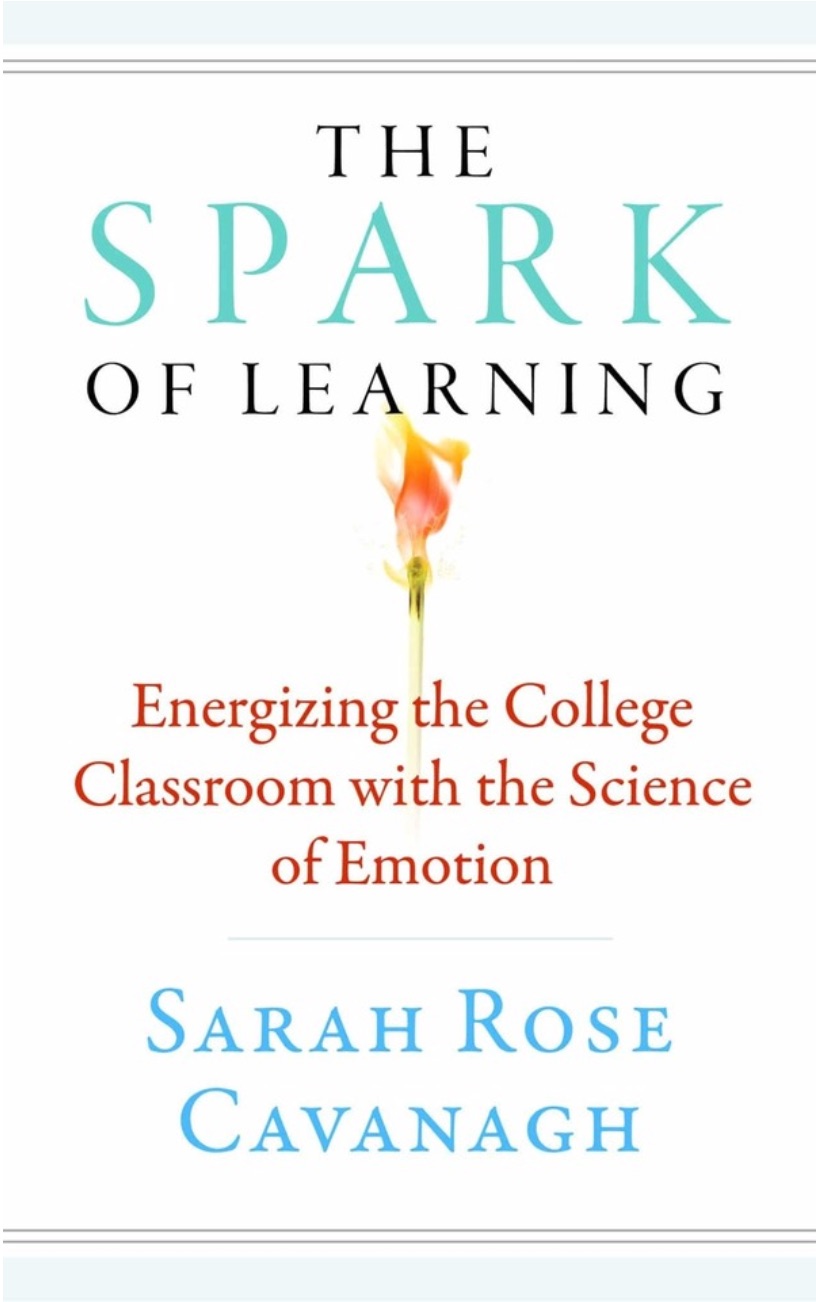
Fall CTLI Book Group: The Spark of Learning
In Fall 2026, join your colleagues for a book group on The Spark of Learning: Energizing the College Classroom with the Science of Emotion by Sarah Rose Cavanagh.
Description
Historically we have constructed our classrooms with the assumption that learning is a dry, staid affair best conducted in quiet tones and ruled by an unemotional consideration of the facts. The field of education, however, is beginning to awaken to the potential power of emotions to fuel learning, informed by contributions from psychology and neuroscience.
In friendly, readable prose, Sarah Rose Cavanagh argues that if you as an educator want to capture your students’ attention, harness their working memory, bolster their long-term retention, and enhance their motivation, you should consider the emotional impact of your teaching style and course design. To make this argument, she brings to bear a wide range of evidence from the study of education, psychology, and neuroscience, and she provides practical examples of successful classroom activities from a variety of disciplines in secondary and higher education.
How to Sign Up
To sign up for the group, please sign into your VSC account and submit the following form:
Please RSVP by Friday, August 28. We will poll those that RSVP to schedule meeting dates based on participant availability.
Teaching Effectiveness Certificate
The Teaching Effectiveness Certificate Program is a voluntary professional development opportunity that provides recognition to instructors invested in growing their teaching practice. The certificate program provides a structure to engage in developing teaching effectiveness through implementation, self-reflection, and growth, grounded in the evidence-based teaching practices of the Teaching Effectiveness Framework (TEF).
Each year, the CTLI will offer a “depth” approach for a single domain. For 2026-27, the Teaching Effectiveness Certificate will be offered in the Student Motivation domain. Instructors will have opportunities to earn Domain Experience Units (DEUs) by:
- Participating in a professional development experience.
- Implementing a teaching change based on what they learned.
- Evaluating and reflecting on the impact of that change.
- Submitting a summary of the learning, efforts, and impact on student learning for approval; submissions will be evaluated against the Rubric for Post Implementation Reflection (see Step 4 below).
Any instructor who earns ten DEUs in the 2026-27 academic year will receive the Student Motivation Teaching Effectiveness Certificate.
Learn more on the Teaching Effectiveness Certificate webpage.
Faculty Learning Communities
A Faculty Learning Community (FLC) is an interdisciplinary group of faculty members who collaborate with their peers to explore a topic of interest related to teaching and learning. It is structured as a year–long program in which the group learns together, shares ideas, provides encouragement and support, and affects positive change.
This year, we are offering FLCs on two topics:
Visit the FLC topic page you’re interested in to learn more and sign up! Space is limited.
Teaching Squares
About Teaching Squares
A teaching square is a group of four instructors who agree to observe each other during a semester, using an agreed upon set of observation norms. It is designed to be a non-evaluative, supportive, and growth-based process. Participants set at least one personal teaching goal and then observe others before reflecting on their own practice.
Benefits of Joining a Teaching Square
In addition to reflecting on their own teaching practices, participants benefit from making connections with colleagues, sharing ideas, reigniting their passion for teaching, and having time set aside to discuss best instructional practices with supportive peers.
Teaching Square participants have the opportunity to earn Domain Experience Units (DEUs), which contribute toward earning a Teaching Effectiveness Certificate in the domain selected for that academic year.
How to Learn More and Sign Up
Learn more about the group process and how to sign up on the Teaching Squares Program webpage.
Mid-Semester Group Instructional Feedback Technique (GIFT)
Introduction to the Program
The Mid-Semester Group Instructional Feedback Technique, or GIFT, is an evidence-based practice that provides instructors with actionable feedback to improve the quality of a course. A GIFT is intentionally conducted mid-semester to allow time for adjustments that will improve student learning.
To conduct a GIFT, a member of the CTLI staff visits a class, interviews students, and reports back to the instructor. Sometimes referred to as a Small Group Instructional Diagnosis, this process provides timely formative feedback to the instructor and engages students in reflection on their own learning.
A GIFT is best utilized by new faculty as well as faculty exploring a specific innovation or innovative approach to their teaching. The GIFT is confidential and unrelated to formal evaluation of faculty (and it is not a substitute for peer or Dean observations).
Learn More and Express Your Interest in Participating
We are now collecting information about who is interested in participating in the fall semester. Class visits will take place in late October. Read more about the program and sign up to participate on the Mid-Semester GIFT Program webpage.
Academic Support and Educational Opportunity Programs
As a Complete College America (CCA) Accelerator institution, we have an opportunity to share professional development programming offered by their organization. Below is an upcoming workshop series that may be of interest to members of the VTSU faculty.
Syllabus to Skill: A Fast-Track Lab for Embedding Micro-Credentials Virtual Workshop
Syllabus to Skill is a two-hour working session where faculty embed an industry-recognized micro-credential directly into an existing course. This is not a lecture or planning meeting — participants arrive with a syllabus and leave with a revised version ready to launch. Led by Dr. Jennifer T. Edwards, Professor and Former University Administrator, the two-hour working session provides a step-by-step framework faculty can reuse across courses and departments.
AUDIENCE
Faculty, Department Chairs, and Curriculum Designers
GOALS
Select a micro-credential that fits the course’s learning outcomes • Identify the specific assignment that serves as the basis for earning the credential • Leave with a repeatable process for embedding micro-credentials in other courses.
DELIVERABLES
Each participant leaves with a complete Foundation Kit:
- Revised syllabus with a micro-credential embedded
- Making Courses Career-Ready Worksheet
- Student-facing talking points and LMS announcement template
- Academic and Career Maps for Majors
- Plug-and-Play Micro-Credentials Map
- Micro-Credentials Menu and free credential options by college
HOW THE TWO HOURS WORK
- The Why – Career data and credential options that make the case for your discipline
- The Work – Select a credential, identify the right assignment to anchor it, and revise your syllabus
- The Map – See how credentials fit into a full degree pathway, plus Q&A
WORKSHOP DATES
Sign up for one of the below sessions.
- Sept 15, 2026 from 1:00-3:00pm (CDT)
- Oct 13, 2026 from 1:00-3:00pm (CDT)
- Nov 10, 2026 from 1:00-3:00PM (CDT)
- Dec 16, 2026 from 1:00-3:00pm (CDT)
Building Anti-Racist Educators: Reading & Inquiry Series
This Reading and Inquiry Series provides a monthly set of tools for learning, introspection and having conversations about issues of racism in our university, classrooms and communities. We hope that through regular reflection and conversation, you can get better at recognizing and resisting your biases and the impact they have on your students and colleagues.
Meetings Dates & Times
The group will meet for 90 minutes once per month when classes are in session, beginning in September. A survey will be sent to all those who express interest to identify a day of week and time that works for the majority.
How to Sign Up
To receive a calendar invitation, Zoom link, and access to the group’s Canvas space, please fill out the Vermont State Colleges Building Anti-Racist Educators Sign-Up Form.
Online Learning Consortium
All VTSU faculty who are involved with, or who would like to learn more about online or hybrid learning are invited to take advantage of the VTSU Membership with the Online Learning Consortium.
What is the Online Learning Consortium (OLC)?
OLC is a vibrant community dedicated to advancing quality online, blended, and digital learning in higher education. Founded in 1999 as the Sloan Consortium, OLC has been at the forefront of online education for over two decades. It brings together diverse professionals, including faculty, administrators, and instructional designers, offering extensive resources, original research, and professional development opportunities. OLC also provides quality standards tools to help institutions and faculty enhance their online programs.
How do VTSU faculty access the VTSU institutional membership?
Go to My Online Learning Consortium and click on “Create an Account.” Please use your @vermontstate.edu or @vsc.edu email address as your username, which will create the affiliation with the institutional membership. OLC has several newsletter groups you can opt-in to when creating your profile. If you choose to only opt-in to one newsletter, choose OLC Today. This newsletter covers noteworthy content as well as updates across OLC. This newsletter is sent every Tuesday.
What are the free benefits and opportunities for faculty?
All OLC webinars are free with institutional membership. These tend to last one-hour. In addition to upcoming webinars, many recent ones are available through the “on demand” option.
The peer-reviewed journal Online Learning is published quarterly and is dedicated to the development and dissemination of new knowledge at the intersection of pedagogy, emerging technology, policy, and practice in online environments
What additional professional development opportunities exist through OLC?
OLC’s highly regarded Online Teaching Certificate Program is discounted for institutional members. Leading from the conceptual to the implementation of online learning best practices, the Certificate is offered as a sequence of one foundation course, followed by elective courses and creation or revision of an online course under the guidance of a mentor. At the end of this program, participants will be prepared to design and develop a complete online or blended course based on current research and best practices.
OLC offers discounted workshops geared to faculty on a range of topics from artificial intelligence to trauma-informed pedagogy.
OLC sponsors two annual conferences: Innovate (spring) and Accelerate (fall). Innovate focuses on driving innovation in the realm of online, digital, and blended learning while Accelerate shares research and best practice related to these topics.
Upcoming Workshops
Note: All upcoming events can be viewed on the CTLI Events calendar. See below for the next 10 sessions.
- October 23 @ 12:15 pm – 1:15 pm
Critical Thinking, Part 2: The Brookfield Approach
- October 26 @ 12:15 pm – 1:00 pm
Staying in the Loop Series – Disability Services
- October 28 @ 12:00 pm – 1:00 pm
Providing Choices: Impact on Student Motivation and Engagement
- November 2 @ 12:15 pm – 1:00 pm
Staying in the Loop Series – The Office of Culture and Institutional Excellence
- November 3 @ 12:00 pm – 1:00 pm
Collaborative Learning: Increasing Student Motivation and Engagement Through Peer Instruction
- November 9 @ 12:15 pm – 1:00 pm
Staying in the Loop Series – ROAD to Success
- November 12 @ 4:00 pm – 5:00 pm
Providing Choices: Impact on Student Motivation and Engagement
- November 16 @ 12:15 pm – 1:00 pm
Staying in the Loop Series – Multilingual Student Services
- November 17 @ 10:00 am – 11:00 am
Collaborative Learning: Increasing Student Motivation and Engagement Through Peer Instruction
- November 30 @ 12:15 pm – 1:00 pm
Staying in the Loop Series – McNair Scholars Program
Higher education, as with many other industries, is adjusting to rapid advancements in artificial intelligence and the increasing use of generative AI tools in the workplace. In the CTLI, through reading, research, workshop development, and faculty learning community facilitation, we have been gaining knowledge of best practices as they relate to teaching and learning. This year, we will be creating tutorials on some of these key skills for faculty and staff members. We are collating Generative AI resources on our webpage for easy access, as well.
Check out our first tutorial on Understanding AI and AIED. And see if you can ace the knowledge check at the end!
Previous Tutorials:
- Coming soon!
If you have feedback on the tutorial or topics you’d like to see us cover in future months, let us know by emailing ctli@vsc.edu. Thank you so much.
Multilingual Student Services
This past May, our sponsored and invited guest speaker from the University of Texas at El Paso, Dr. Laura E. Mendoza-Fierro, facilitated a professional training workshop titled Culturally Responsive and Practice-Oriented Strategies in Healthcare Programs.
The workshop focused on practical, language aware teaching strategies for faculty who work with multilingual learners in healthcare related majors. It addressed topics such as supporting student participation, strengthening comprehension of medical and clinical language, designing inclusive classroom practices, understanding the role of first language processing, and helping multilingual students navigate the academic and communication demands of rigorous healthcare programs.
A recording of the session is now available on the Multilingual Student Services SharePoint site.
Department of Health and Wellness
The VTSU Department of Health and Wellness provides mental health counseling, nursing services, and wellness education to all undergraduate students at Vermont State University. These services can be provided in person or online and are free. We are consistently used as a resource for faculty to provide presentations on various topics, consultation and support about student concerns, and to provide in-the-moment support during escalated or crisis situations.
We hope faculty feel confident to send students our way with their mental health and medical concerns while also feeling comfortable to reach out to us themselves with any questions or concerns. Below is our direct contact information.
Jackie Eddy, Associate Director of Health and Wellness
Jacqueline.eddy@vermontstate.edu
802-468-1314
*Can be contacted to support any campus
Castleton Wellness Center
castletonwellness@vermontstate.edu
802-468-1346 (Campus Center)
Johnson Wellness Center
wellness@vermontstate.edu
802-728-1270 (Martinetti Hall)
Lyndon Wellness Center
lyndonwellness@vermontstate.edu
802-626-6440 (Rita Bole Complex)
Randolph Wellness Center
wellness@vermonstate.edu
802-728-1270 (Conant)
Williston Campus
wellness@vermontstate.edu
802-468-1346
VSCS Libraries
Welcome back! We hope you had a wonderful summer and are ready for an exciting new academic year. Check out the library updates below to help you get the year off to a great start. If you have any questions, feel free to reach out to a liaison librarian!
Access to Chronicle of Higher Education
We now have publisher access to the Chronicle of Higher Education! In order to access content, however, you will need to create a Chronicle account using your vsc.edu email address.
How to Create a Chronicle Account
- Access the Chronicle: Chronicle of Higher Education
- Click “Sign in” in the upper right corner.
- Click “Don’t have a Chronicle account? Sign Up.”
- Fill out the form using your vsc.edu email. (It must be the version ending with “@vsc.edu”.)
- Create a unique password and add it to your password manager.
- Unselect or select the option to receive the Academe Today newsletter.
- A confirmation email with instructions will be sent to you.
Accessing the Chronicle Off Campus
- Go to the Chronicle of Higher Education website.
- Sign In to your new Chronicle account.
New Library Learning Modules
Back in May, the VSCS Libraries launched 11 new Library Learning Modules (LLMs) on information literacy for Canvas courses! The modules support faculty teaching about AI, citations, evaluating information, and other essential research and academic skills. They were designed with accessibility, long-term durability, Canvas compatibility, and academic standards in mind.
Keep an eye out for introductory webinars in September 2026.
Career Development
Canvas Course
VTSU Career Development offers the Career Development Program (CDP) Canvas course which is designed to help students build career readiness throughout their time at VTSU. The CDP consists of 10 self-paced career development modules that guide students through essential milestones such as exploring career interests, researching occupations, connecting majors to careers, developing professional materials, networking, internships, and preparing for employment or graduate school. If you’d like us to enroll you as an Observing Instructor, or add your class to the course, please reach out to Careers@VermontState.edu.
Career Development staff are also available to partner with faculty through classroom presentations, module integration, workshops, and other career readiness activities. To request a presentation for your fall classes, please complete the Career Development Presentation Request Form.
Fall Workshop Series
VTSU students have the opportunity to explore career readiness through interactive virtual workshops on resumes, internships, job searching, interviewing, Handshake, and more.
- Handshake 101 (September 2, 12:15-1:15pm)
- Resume (September 16, 12:15-1:15pm & 6:00-7:00pm)
- Internship (September 30, 12:15-1:15pm & 6:00-7:00pm)
- Job Search (October 14, 12:15-1:15pm)
- Internship (October 28, 12:15-1:15pm & 6:00-7:00pm)
- Interview (November 11, 12:15-1:15pm)
Please encourage your students to join us for one or more sessions!
Fall Fair Calendar
Students also have the opportunity to discover everything VTSU has to offer – from campus jobs and student clubs & organizations to university resources, programs, and local opportunities – all in one place.
Lyndon Opportunity Fair | Veteran’s Park
August 28, 11:30am-1:30pm
Johnson Opportunity Fair | Stearns
September 1, 11:30am-1:00pm
Randolph Opportunity Fair | Morey Plaza
September 2, 11:30am-2:00pm
Williston Opportunity Fair | 400 Room
September 2, 12:00-1:30pm
Castleton Opportunity Fair | Pavillion
September 3, 11:00am-2:00pm
Randolph Career Fair | SHAPE Gym
October 28, 11:00am-2:00pm
Opportunity Fairs are co-sponsored with Student Activities and Student Government.
The VSC IT Learning Technologies Team
Learning Spaces Tech Guides
The Learning Technologies Team encourages you to check out their Learning Spaces Tech Guides site. This site includes information on classroom and learning spaces technology, support guides, and FAQs. If you’re curious about what technology is in your room, or how to use the technology, this site provides on-demand support!
Need Help?
For help from the VSC IT Learning Technologies Team, please submit a ServiceDesk ticket.

Fall Syllabus Template
The fall undergraduate syllabus template is available for use. As per usual, modifications and updates have been highlighted on the cover sheet; if you are rolling forward a previous syllabus, be sure to make updates the align with this newest version of the template.
Canvas Course Template
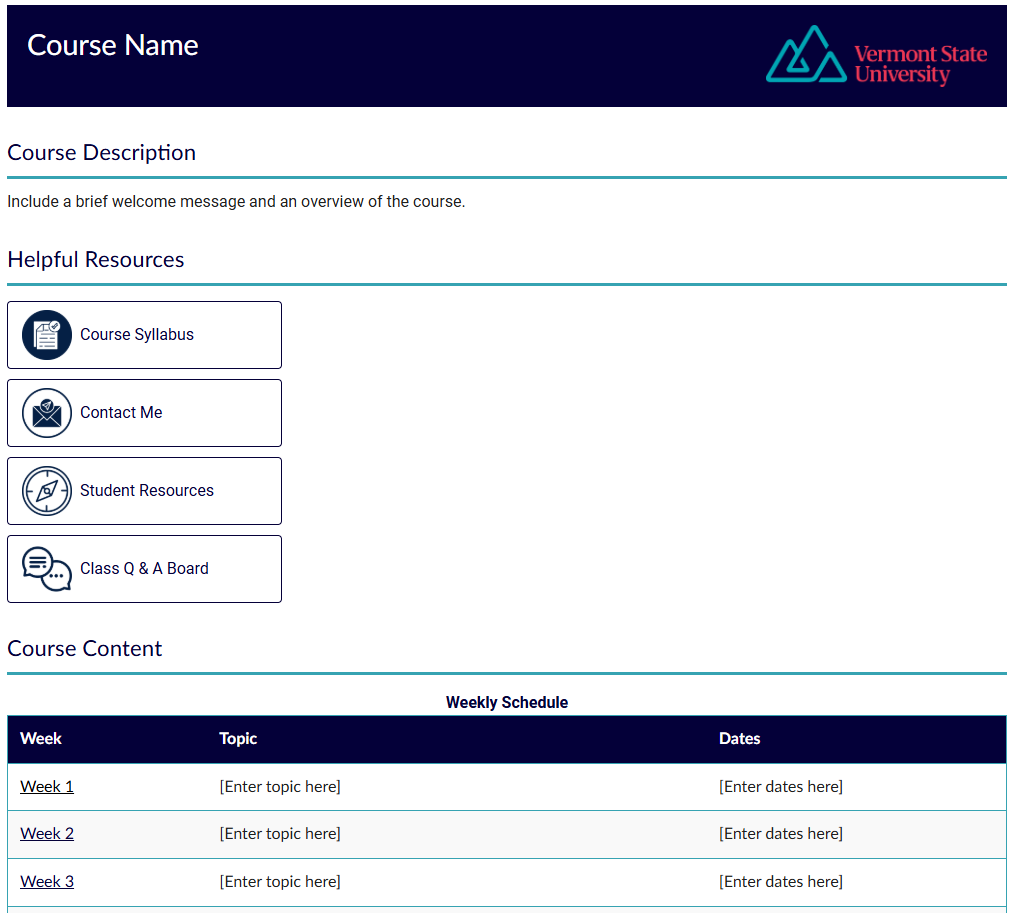
The Canvas Course template has been rebranded and is now available in Canvas Commons. In addition to aesthetic improvements, the template is 100% digitally accessible and includes some added functionality, such as the addition of “Return to Home Page” links for student convenience.
In addition to the template itself, the Canvas Template Adoption Guide has been updated to reflect the changes.
New Faculty – Getting Started Module
The New Faculty – Getting Started module has been updated for the 2026-2027 academic year. This module is introduced to new faculty members during their orientation to the university, but the information and resources presented in it could be helpful to all members of the institution. The module includes the university’s mission, vision, and community values, as well as institutional, faculty, student support, and teaching resources.
This year’s iteration includes the integration of the Teaching Effectiveness Framework as well as some policy and procedure updates. There are still several resources, however, that will be updated over the summer as the information becomes available. Anticipated changes have been noted within the module.